
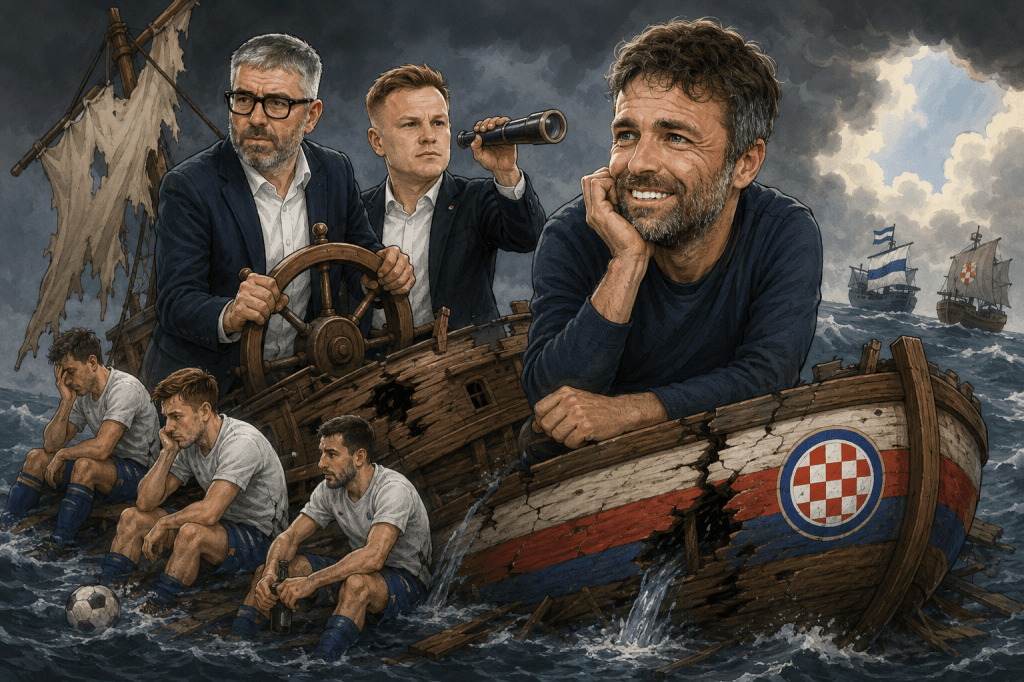
On paper, Hajduk Split did what mattered. Despite a 2–1 defeat to Žilina in the second leg of their UEFA Europa League first qualifying round tie, they progressed to the next stage. In reality, however, the result masked a performance that should concern everyone associated with the club.
Žilina are an energetic but limited side—arguably one that would struggle to compete for promotion from Croatia’s second division. Yet over 90 minutes they looked capable of eliminating one of Croatia’s biggest clubs. The aggregate score may suggest a controlled qualification, but the football told a very different story.
A Team That Lost Control
The defining feature of Hajduk’s performance was not tactical failure but collective passivity.
During the second half, Gonzalo García appeared to lose control of the game—not simply in a tactical sense, but over the team’s discipline and competitive intensity. Hajduk defended as though operating in second gear, with minimal collective commitment out of possession. Pressing was inconsistent, defensive transitions were slow, and players often appeared content merely to occupy space rather than actively disrupt Žilina’s attacks.
When a team collectively approaches the game with such low intensity, tactical analysis quickly becomes secondary. It is difficult to evaluate positional structures or movement patterns when the basic competitive principles—aggression, concentration and defensive sacrifice—are absent.
Žilina repeatedly exploited that passivity. They created three outstanding chances in addition to the two goals they scored. Roginić found the net once but also squandered two clear one-on-one opportunities. Had Žilina possessed greater composure in front of goal, a 5–1 victory would not have flattered them.
That possibility alone should alarm Hajduk far more than the fact they ultimately qualified.
The More Important Question: Why Was Hajduk So Passive?
The tactical shortcomings are obvious. The psychological ones are far more worrying.
Hajduk’s players looked less like a team fighting to secure European qualification and more like professionals simply waiting for the final whistle. There was little visible urgency, emotional investment or collective responsibility. Winning appeared desirable rather than essential.
That inevitably raises uncomfortable questions about the dressing room.
Has the club assembled a squad with too little emotional connection to Hajduk’s identity? An increasing dependence on foreign players is not inherently problematic—many successful clubs thrive with international squads—but only when a strong collective culture binds them together. When that culture weakens, the emotional standards often decline with it.

Players who do not genuinely identify with the club are more likely to deliver only the minimum professional standard rather than the extraordinary commitment required in difficult moments.
That is exactly how Hajduk looked against Žilina.
García’s Strengths—and His Biggest Weakness
Gonzalo García deserves considerable credit as a coach of positional football. His teams generally possess clear structures in possession and a sophisticated understanding of space.
However, elite management extends beyond tactical design.
Building tactical systems is one skill; sustaining trust, unity and emotional investment over an entire season is another.
Whether fair or not, García increasingly creates the impression that players are interchangeable pieces within his football model rather than individuals whose trust must be earned and protected. Last season many observers felt he did not publicly stand behind several members of his squad during difficult moments. This summer he has again appeared remarkably detached regarding the future of players who were central to his team only months ago.
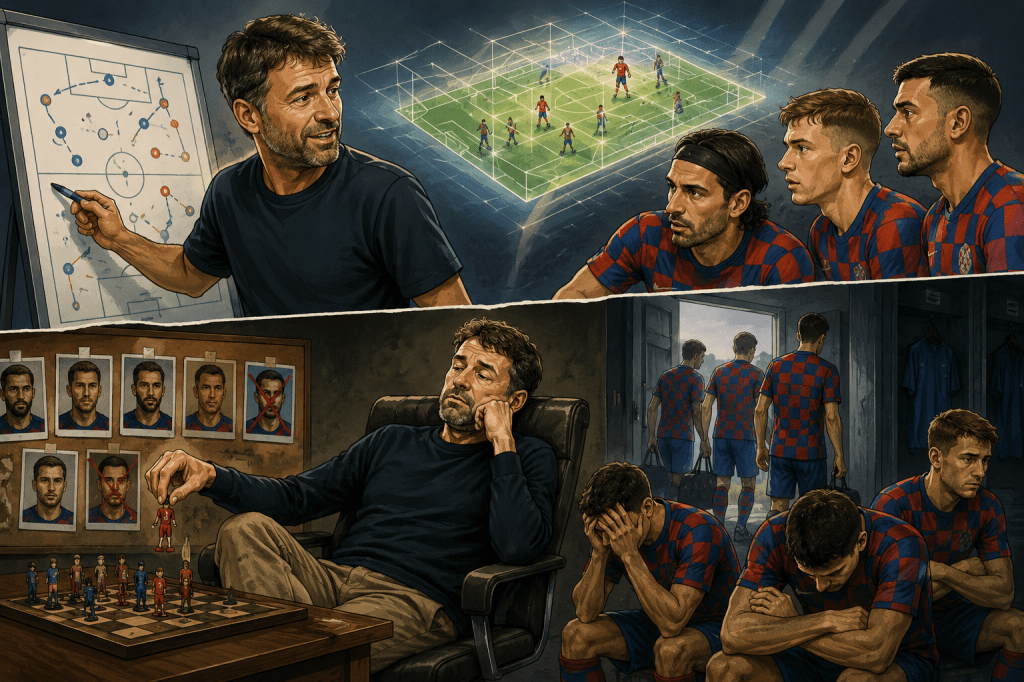
Managers inevitably make difficult personnel decisions, but dressing rooms notice who is defended and who is left exposed. When players begin to feel they are merely expendable assets rather than valued members of a collective, commitment often declines. Elite footballers are not motivated only by contracts and tactical ideas; they are motivated by trust.
That perception matters.
Modern dressing rooms are built on mutual loyalty as much as tactical instruction. Players are significantly more willing to sacrifice themselves for a manager they believe would do the same for them.
Without that relationship, professionalism alone rarely produces exceptional collective performances.
The danger is the emergence of a squad that is technically competent but emotionally detached—a group that fulfils contractual obligations without fully embracing the club’s ambitions.
Young players rarely flourish in that environment.
Rumours Should Not Be Ignored—But Neither Should They Be Treated as Facts
There are persistent rumours surrounding disciplinary issues within the squad, including allegations of alcohol-related problems and players arriving late for training. Those claims remain unverified and should therefore be treated with caution.
Nevertheless, if there is substance behind those reports—and if they represent a continuation of concerns raised during pre-season—they would indicate deeper structural problems than any tactical adjustment can solve.
Equally significant are reports suggesting that Marko Livaja and García are not fully aligned. Again, external observers cannot know the reality inside the club, but prolonged tension between a manager and the team’s most influential player rarely leads to sustained success.
If even part of those reports prove accurate, Hajduk’s greatest challenge this season will not be tactical. It will be restoring authority, discipline and unity inside the dressing room.
Recruitment Without Identity
Responsibility cannot rest solely with the coach.
Sporting director Robert Graf’s recruitment strategy also deserves scrutiny. The club appears increasingly focused on professional processes and analytical decision-making, yet football cannot be managed as a purely corporate exercise.
Recruitment must balance data with character, age profile and cultural fit.
Too many recent arrivals appear neither young enough to become long-term development projects nor experienced enough to elevate the team’s competitive ceiling immediately. The result is a squad filled with competent professionals but too few players capable of changing the emotional temperature inside the dressing room.
Even more concerning is the apparent lack of a coherent sporting pathway. Hajduk have already lost, or appear willing to lose, several of their brightest young prospects, while talents such as Pukštaš and Sigur have openly been linked with departures. At the same time, the club is recruiting players who do not obviously fit a long-term developmental strategy, raising legitimate questions about what that strategy actually is.
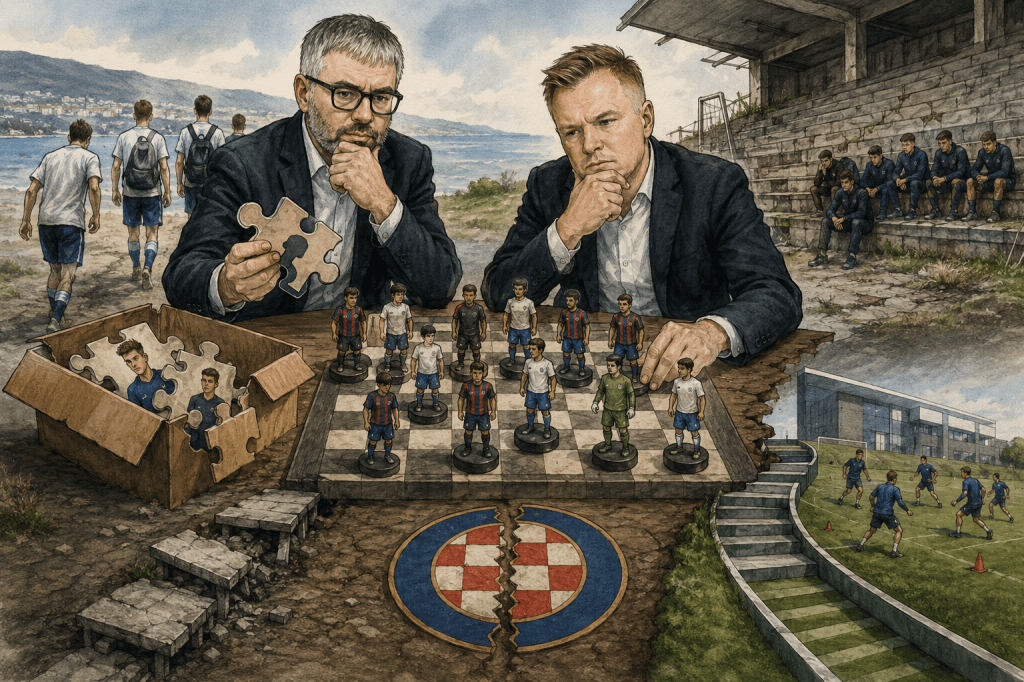
The structural picture is equally worrying. Hajduk’s reserve team will compete in Croatia’s fourth tier, offering limited value for elite player development, while Dinamo Zagreb have successfully re-established their second team in the second division. The contrast is striking. One club appears to be strengthening its development pipeline; the other appears to be weakening it.
Football clubs require more than efficient recruitment.
They require identity.
At present, Hajduk appear to be searching for one rather than executing one.
Qualification Should Not Hide the Warning Signs
Progression in Europe provides temporary relief.
The performance should provide none.
From the outside, Hajduk currently appear uncertain about their direction. The president, board, sporting director and coaching staff project caution rather than conviction. Instead of implementing a coherent long-term football strategy, the club often gives the impression of experimenting while searching for solutions on the move.
That uncertainty inevitably filters onto the pitch.
Looking Ahead
Based on current evidence, Hajduk face a difficult domestic season.
Their squad has clear limitations, and this match suggested those limitations become significantly more pronounced whenever collective intensity drops. Against stronger opponents, such performances are unlikely to be forgiven.
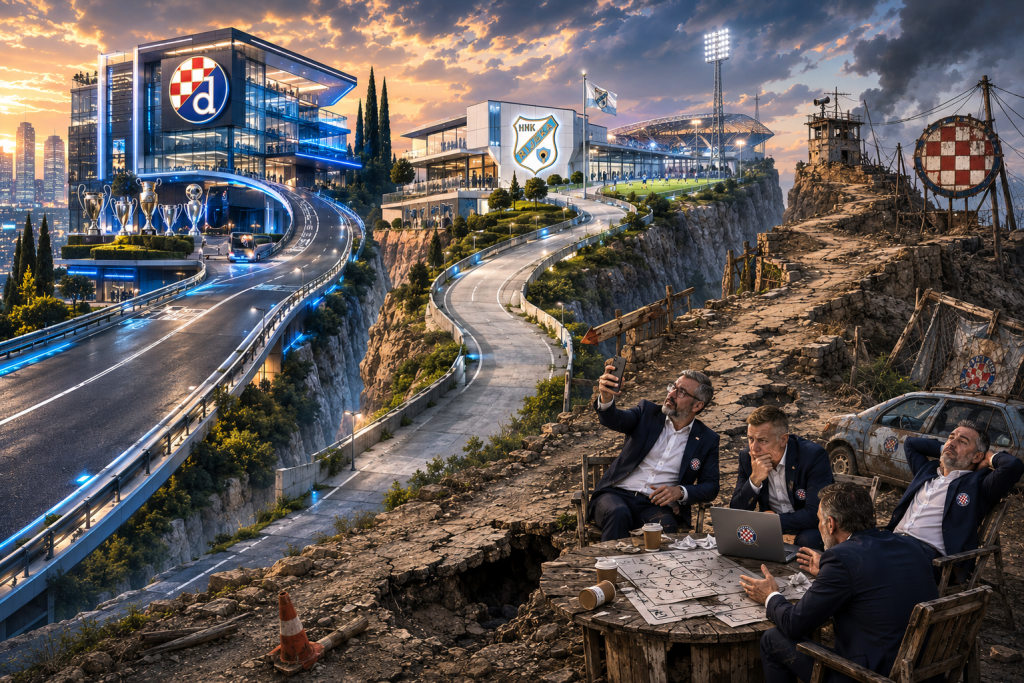
Rijeka enter the season with continuity, tactical stability and a clearly defined football identity. Dinamo Zagreb remain comfortably ahead in virtually every structural aspect of Croatian football—from squad quality and academy development to organisational stability.
Hajduk, by contrast, appear caught somewhere in between: neither rebuilding patiently nor genuinely competing for immediate success.
One poor European performance does not define an entire season.But performances often reveal underlying truths.
Against Žilina, Hajduk qualified.
What they revealed, however, was a club whose biggest problems may not be tactical at all. If the current trajectory continues—with uncertain recruitment, increasingly fragile dressing-room dynamics and no obvious long-term sporting direction—this season could become one of the most disappointing in Hajduk’s modern history.
Qualification bought Hajduk another round in Europe.
It did not buy them any answers.
 Diamond Football Tactics