
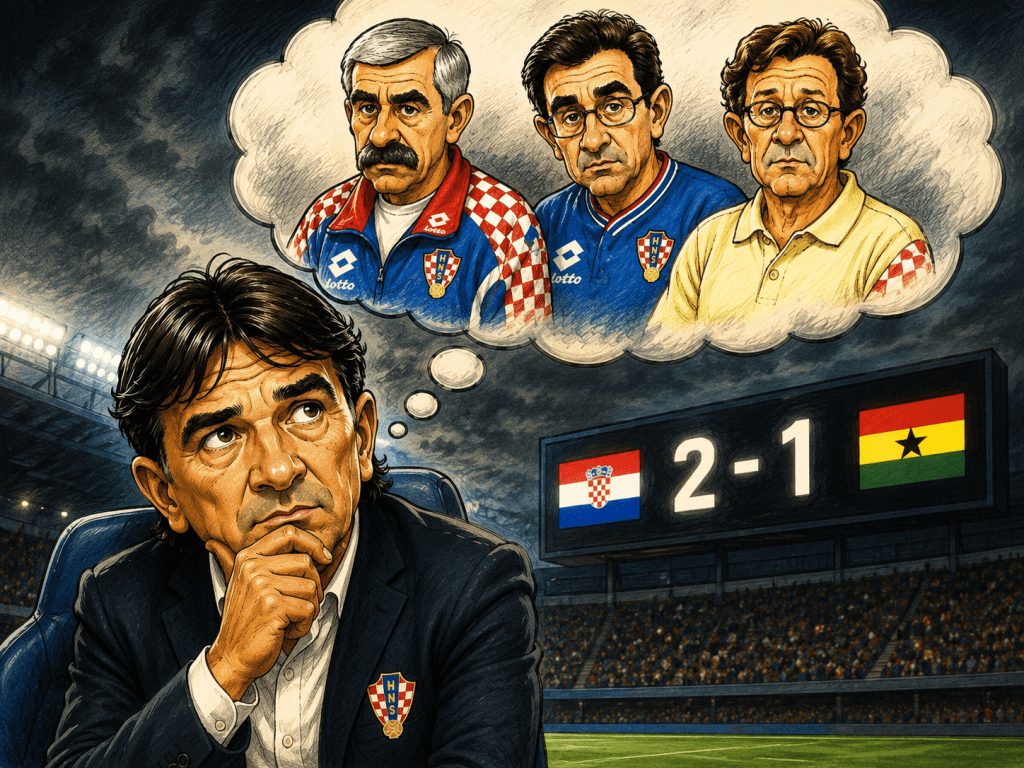
Throughout human history, there have been numerous examples of geniuses surrounding themselves with less capable individuals in the hope that it would lead to success. While this sometimes worked, it is often detrimental to professional integrity, leaving many in the field feeling ashamed. Miroslav “Čiro” Blažević never made that mistake; he coached some of the best Croatian football talents and appointed Ivan Katalinić as his goalkeeper coach, who could always provide valuable, football-related advice.
Katalinić was an experienced and pragmatic coach who had faced the challenges of being a football goalkeeper and had been trained by some of the best coaches in Yugoslavia at the time. He later became a respected football coaching thinker and is credited with several success stories in Croatian club football. Notably, he led Hajduk to the UEFA Champions League quarter-finals in the 1994/95 season, where they lost to the eventual champions, Van Gaal’s Ajax.
Blažević also surrounded himself with Branko Ivanković, another excellent football coach and thinker, who went on to have a respectable coaching career. Čiro never had the luxury of surrounding himself with individuals lacking expertise. He often stated that dishonesty is characteristic of fools and would likely extend that sentiment to those who choose to surround themselves with limited assistants.
Conversely, there are different approaches in life where individuals, due to their egos, surround themselves with mediocrity, choosing people who will never oppose them or think critically. This often proves disastrous. The “yes boss” effect, or purposely surrounding oneself with low-capacity individuals, can lead to calamitous situations. Conversely, when circumstances are favorable and there is no crisis, everything tends to go smoothly.
A prime example of catastrophe stemming from poor leadership is the Nazis’ battle for Stalingrad, where Hitler refused to listen to his generals (at least he had them by his side) and did not allow for a retreat. His centralized approach backfired, resulting in the Nazis being defeated and brought to their knees. Joseph Stalin also prioritized loyalty over competence, surrounding himself with inept individuals. Good generals often avoided his inner circle for fear of punishment for their knowledge. As a result, the Soviet Union was caught off guard during Operation Barbarossa. Even Napoleon Bonaparte thrived when he had generals who could challenge him but deteriorated when he surrounded himself with those too afraid to oppose him. Saddam Hussein built a regime based on loyalty rather than competence, and even Benito Mussolini did not allow opposition.
Several important coaching capacities include preparing a tactical plan for a match through opponent scouting and understanding your team’s strengths and weaknesses. This also involves reading the match as it unfolds, understanding the opponent’s game plan and any changes during the match, and making tactical adjustments to exploit the opponent’s playing dynamics while countering their adaptations. Effective coaches need assistants who can see different perspectives, react quickly, and provide sound advice. Because coaches can become emotionally invested, they often need extra pairs of eyes to observe the game objectively, developing realistic strategies and adaptation plans.
When Everything Is Going Well
Zlatko Dalić and his coaching staff did an excellent job preparing for the match by implementing a 4-2-3-1 formation with narrow wingers. They adjusted their defensive lines when losing possession, transforming into a 4-1-4-1 formation to create a solid middle and low defensive block. This strategy effectively limited Ghana’s opportunities for counterattacks. Modrić was positioned in a defensive midfield role, a position he excelled in during his time at AC Milan. Gvardiol was excluded from the team due to poor performances in the first two rounds, which was a smart and brave decision by Dalić. Baturina played as a false winger, while Sučić and Vlašić took on hybrid interchangeable roles between inverted wingers and mezzalas. It was evident that Dalić had studied Ghana’s offensive and defensive patterns thoroughly, yet it seemed the primary objective was not necessarily to win the game.
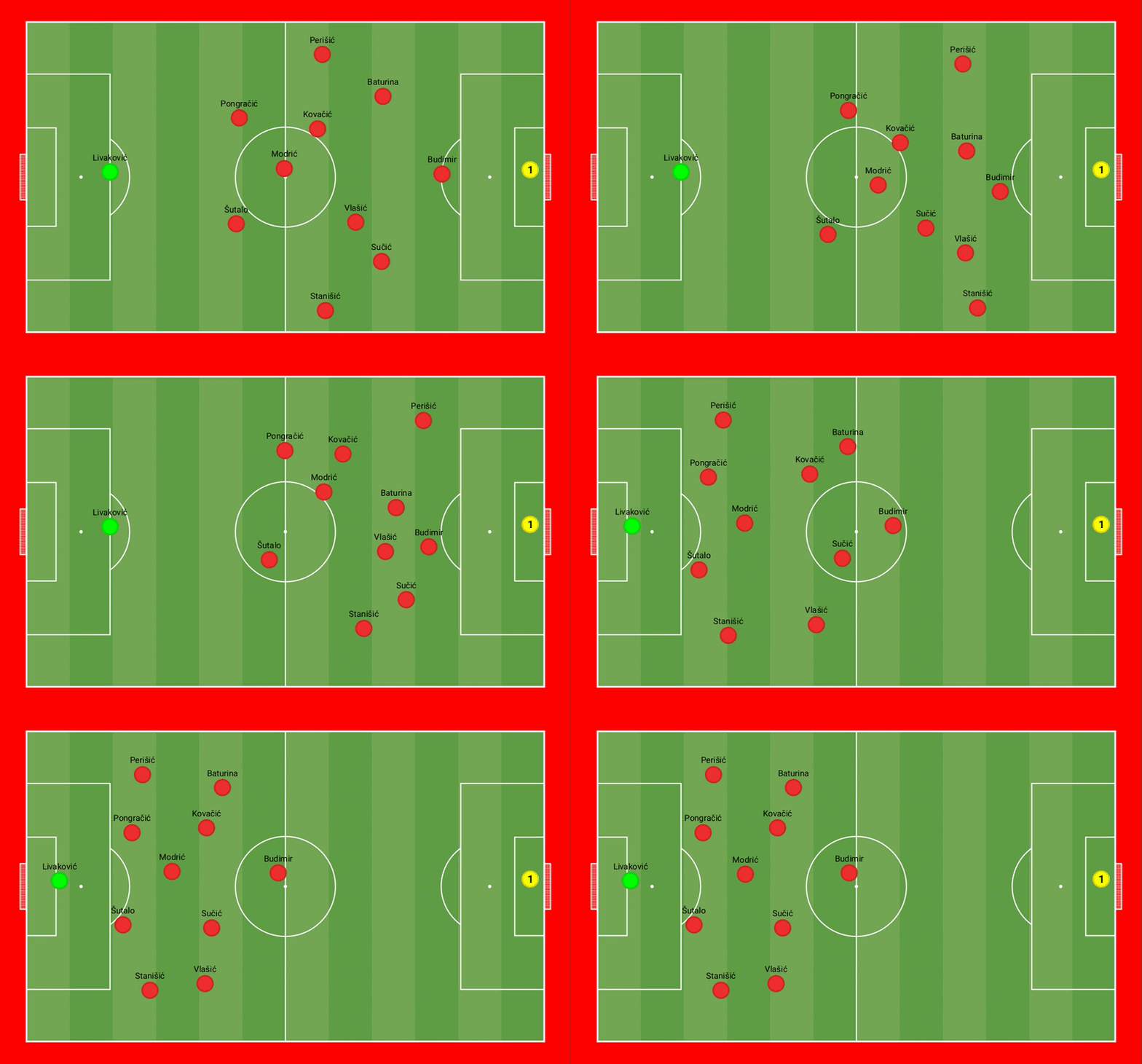
Croatia scored two goals in surprising circumstances. Despite fielding three offensive midfielders who played narrowly, it was unlikely that they would score from almost 30 meters away, especially with the ball going through several pairs of legs and catching the goalkeeper off guard. While Croatia controlled much of the first half, their goals seemed less a result of skill and more a product of sheer luck.
Notably, Ghana had only one clear chance, but it was more significant than any Croatian opportunity in the first half. Semenyo found himself in a good position against Livaković, angled slightly diagonally, but unfortunately struck the ball just a few centimeters wide.
Surrounded by…
In the second half, Ghana made some decisive changes. They switched to a 4-4-2 formation and applied pressure on Croatia’s buildup. This resulted in 25 minutes of dominance from Ghana. Two attackers shadowed Modrić and Kovačić during the buildup, while Dalić and his assistants watched from the sidelines, seemingly unaware of the unfolding situation and waiting to be punished for their inaction.

During this period, Croatia was like a chandelier hanging from the ceiling, waiting for disaster to strike—and it did, from a free kick action. Once again, Croatia displayed poor defensive organization on set pieces, a recurring issue throughout this World Cup.
However, Croatia responded positively after a corner kick, with Nikola Vlašić scoring a header that was remarkable for a player of his stature. It was a goal he may never replicate again.
Dalić did make some adjustments later in the game, but it was clear he did not do so due to a tactical understanding of the situation; rather, he simply refreshed his team with substitutions based on energy levels.

Conclusion
Dalić and his staff prepared exceptionally well, employing a narrow formation for the attacking phase and a low block for defense. However, their goal seemed to prioritize securing a draw rather than pursuing a win. While many may disagree, the victory appeared to be largely a matter of luck, as reflected by the expected goals (XG) statistics: Ghana had an XG of 0.64, while Croatia’s was only 0.42.
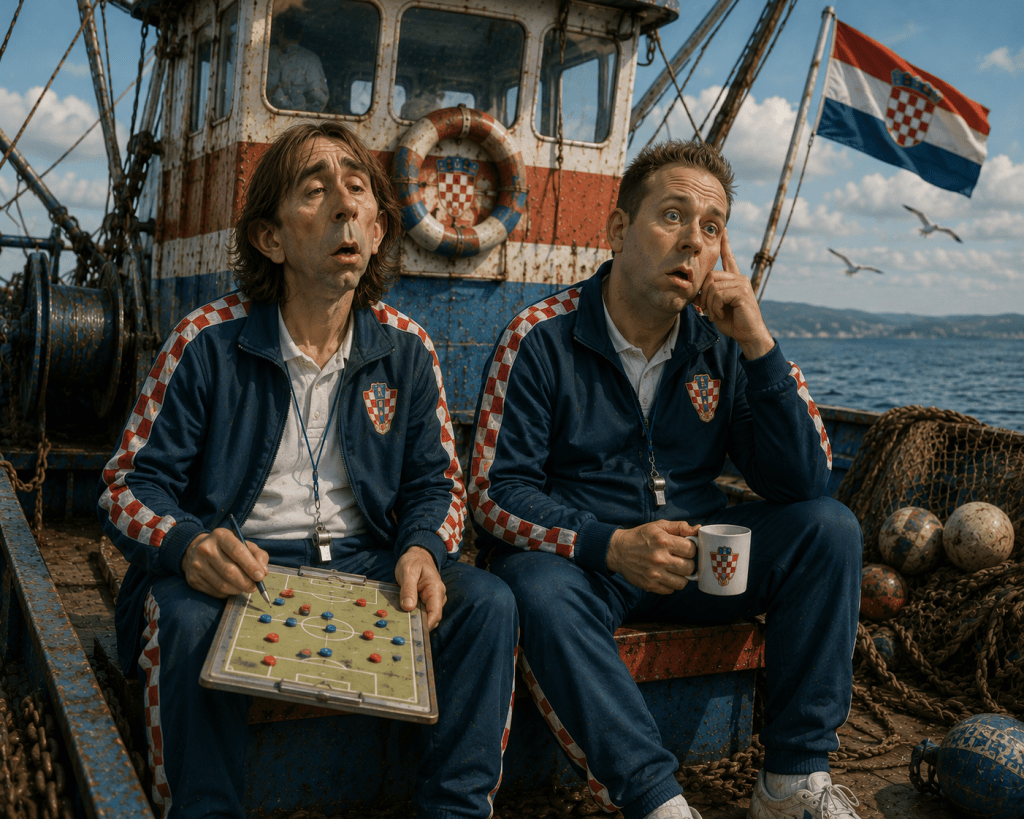
Miroslav Čiro Blažević surrounded himself with some of the greatest coaches of his time, including Ivan Katalinić. Dalić learned many valuable lessons from his mentor, but this was not one of them.
 Diamond Football Tactics