

I Just Died in Your Arms Tonight
Two teams with completely different player profiles clashed in the opening match of Group L at the 2026 World Cup. On one side was Zlatko Dalić, leading a slow-moving yet highly intelligent team; on the other was Thomas Tuchel, at the helm of a side filled with pure athletic machines. Both managers are passionate about team dynamics, but their approaches to creating and maintaining team hierarchy are markedly different. Dalić’s philosophy is heavily influenced by his Catholic background, emphasising group humility and evoking an almost pastoral presence. In contrast, Tuchel relies on scientific and psychological principles to shape his team’s dynamic, leaving nothing to chance.
The two teams met on the pitch last night, and it was expected that both would adopt cautious tactics. However, the game was far from that.
Croatia’s Lineup and High Press
In the lead-up to the match, concerns were raised about Croatia’s midfield strength. Many anticipated that Dalić would set his team up in a 3-4-2-1 formation. There were doubts about whether Luka Modrić and Mateo Kovačić could handle the tempo of England’s game defensively. To address this, Dalić paired Modrić with Mario Pašalić, a decision that proved effective in the first half of the match. Pašalić had an excellent performance, effectively neutralizing Jude Bellingham and even delivering a beautifully chipped pre-assist pass over the English defense to Ivan Perišić at the end of the first half, allowing Musa to score the equalizer. Additionally, Dalić opted to start Petar Musa up front, a move that benefited the team’s scoring efforts.
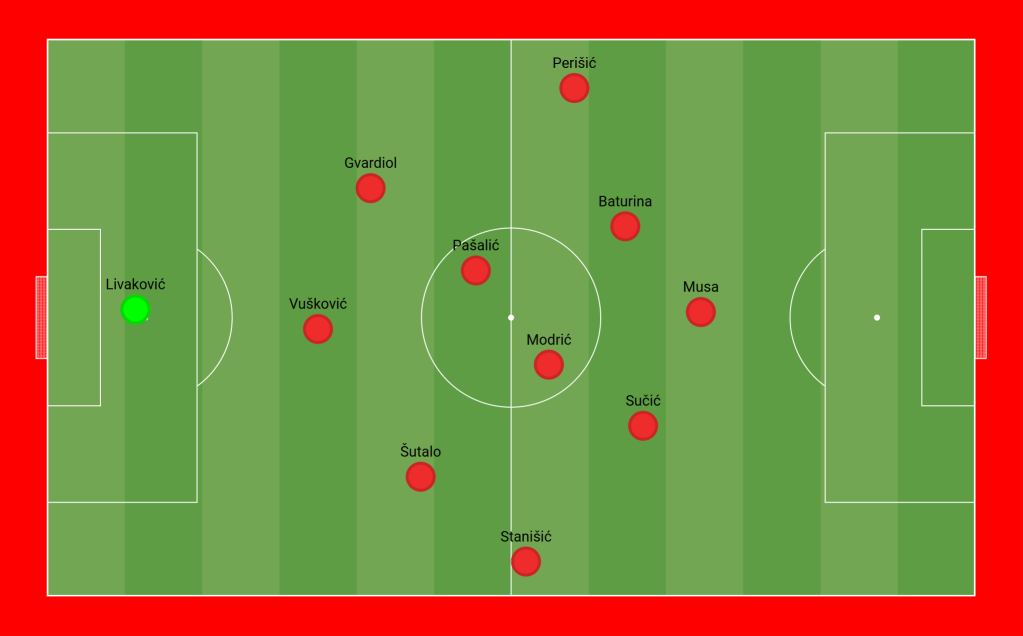
In a departure from his previous tactical decisions, Dalić opted to press England high. He utilized Sučić, Baturina, and Musa in narrow positions. The plan involved either Sučić or Baturina applying pressure on England’s central defenders to direct passes toward the goalkeeper, maintaining high pressure and limiting options for the England defense. They would then run wide, following the ball. This impressive start provided Croatia with significant momentum, particularly thanks to Sučić’s exceptional pressing.
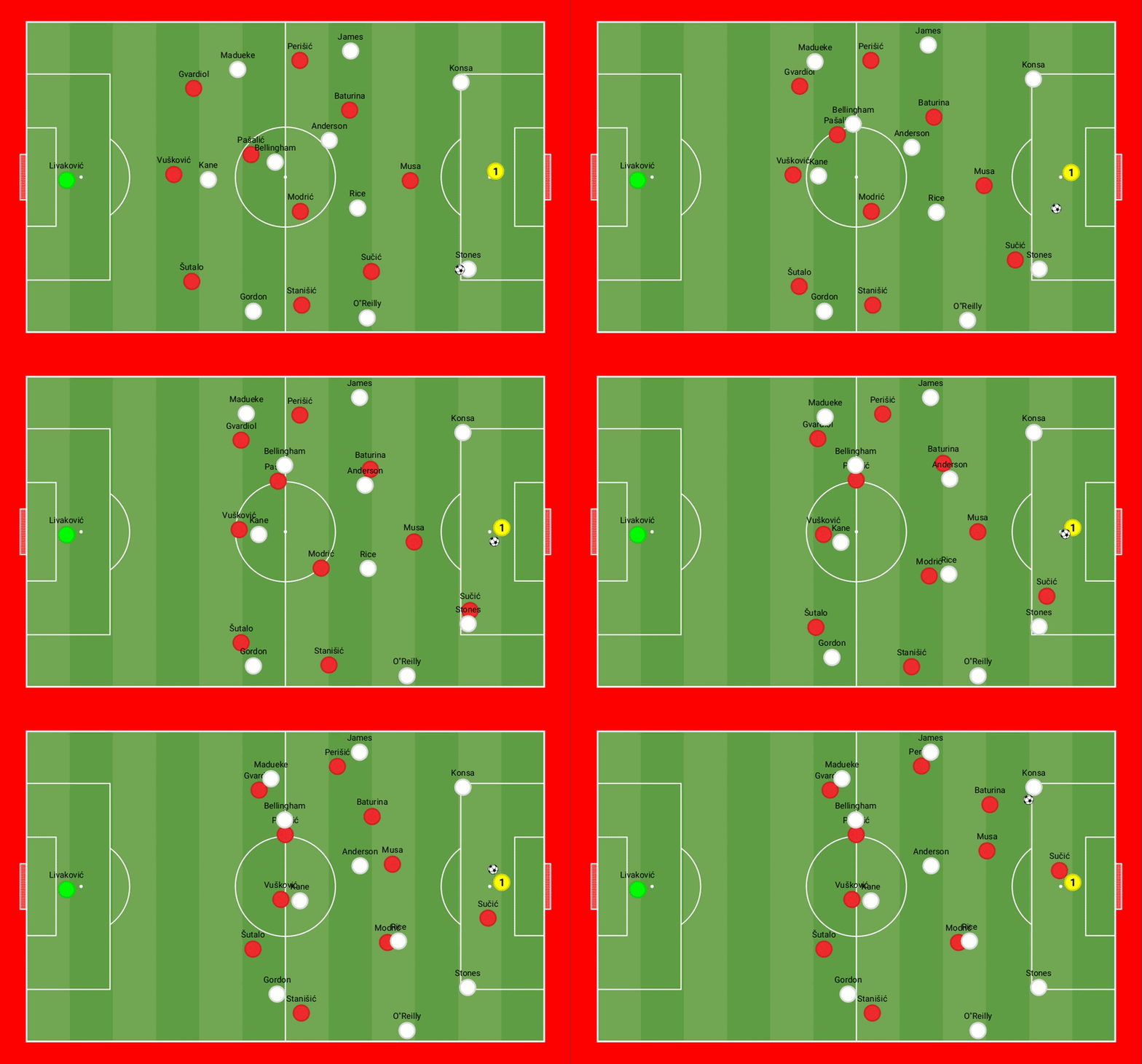
Employing three central defenders allowed Luka Vušković to occasionally step out of line to press Harry Kane or maintain formation depending on the situation, which ultimately resulted in Croatia benefiting and scoring.
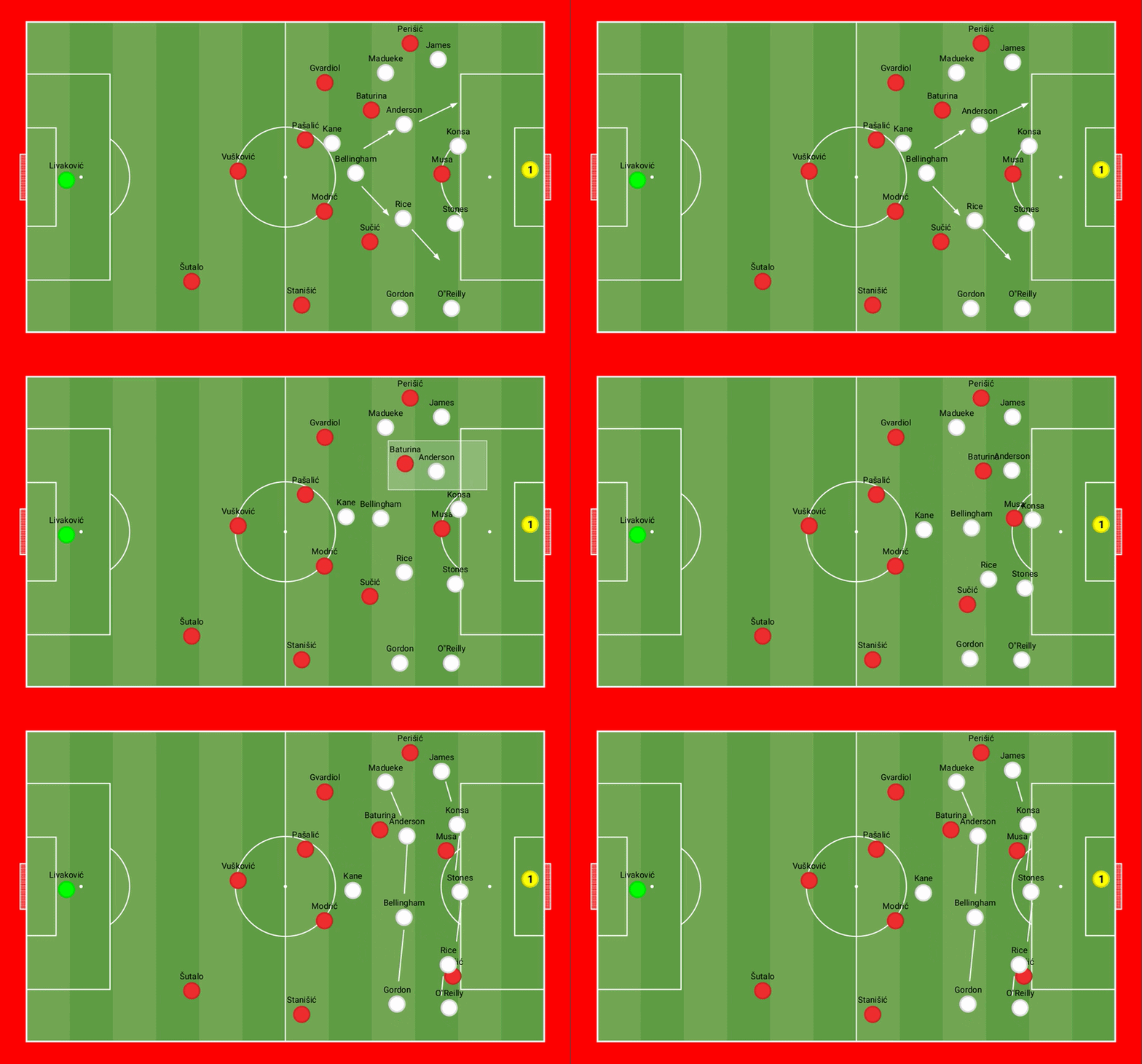
Interestingly, Croatia fell behind twice in the first half due to nearly identical corner kick situations. Declan Rice delivered crosses to the same spot, resulting in a penalty the first time in the 10th minute and a headed goal from Kane the second time in the 42nd minute. This oversight can be attributed to Dalić’s coaching staff, who prepared well in most areas but failed to address corner kicks—England’s strong suit. With over 40% of their goals last year coming from corners and Rice being one of the best corner takers, this neglect was critical. Dalić and his staff chose to implement a combination of zonal and man-marking strategies to defend against corners, which turned out to be disastrous, leaving England with numerous opportunities from set pieces.
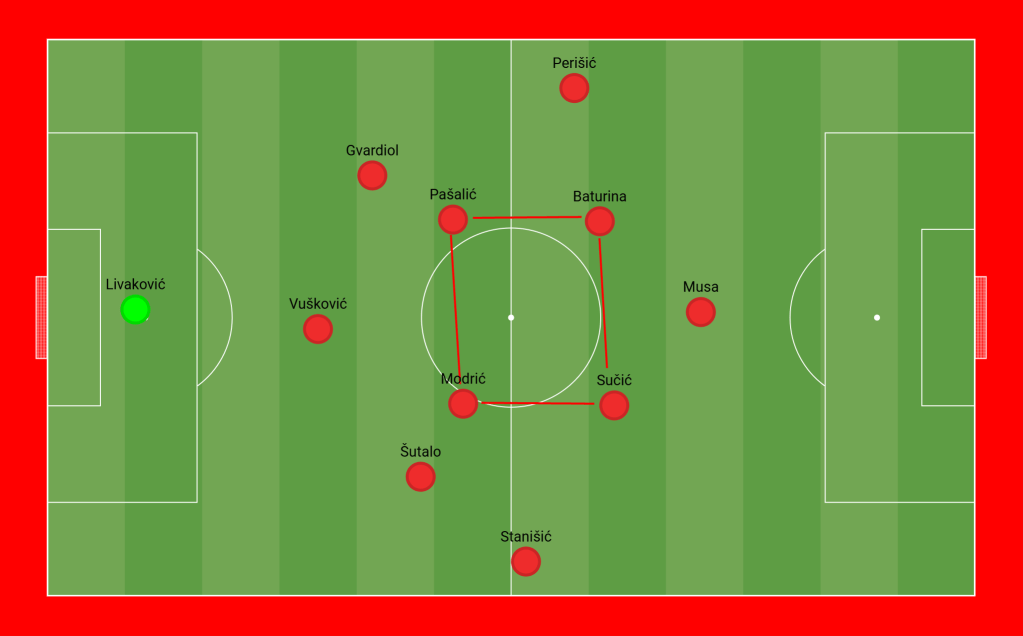
Offensively, Dalić sought control by shaping a box midfield with Pašalić, Modrić, Baturina, and Sučić, hoping for Modrić to set the tempo. However, it quickly became apparent that Modrić’s recent injury severely impacted his performance. Meanwhile, Baturina and Sučić had strong performances, exploiting small pockets of space between England’s lines to create opportunities, even finding the net from such a situation.
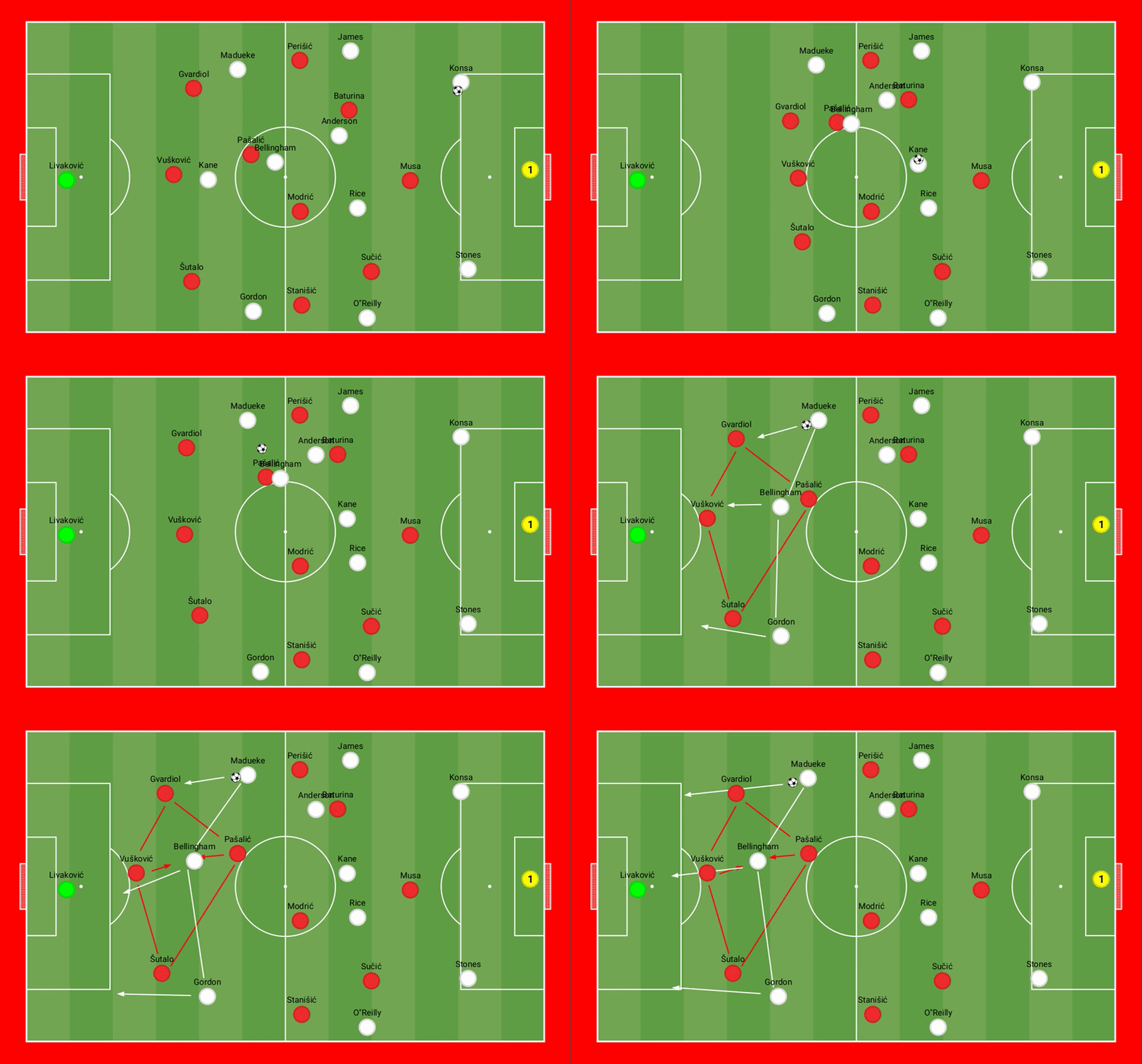
Perišić also stood out, providing depth from his wingback position. Stanišić was effective in playing dynamics as well, making confident runs to receive passes and contributing to the team’s fluidity on several occasions.
England Line-Up and Tuchel’s Innovations
England lined up in what appeared to be a 4-2-3-1 formation on paper, but it effectively played out as a mirrored box-shaped midfield. Harry Kane and Jude Bellingham operated as deeper midfielders, creating a 4 vs. 4 situation in the center of the pitch. Kane’s movements allowed spaces for Noni Madueke, Bellingham, and Anthony Gordon to exploit, a tactic that would prove pivotal in the second half. However, in the first half, they often found themselves struggling against Croatia’s solid defensive wall. Bellingham particularly faced difficulties with Mario Pašalić, who closely marked him throughout.
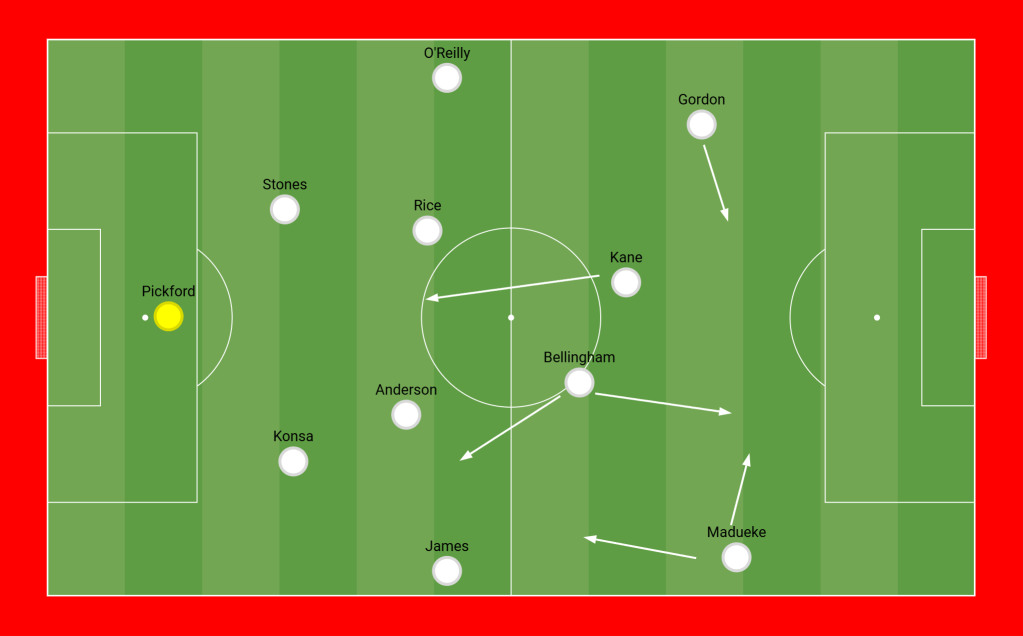
Declan Rice and Elliot Anderson frequently made runs toward John Stones and Ezri Konsa. Harry Kane dropped deeper into midfield, while Jude Bellingham and occasionally Anthony Gordon also ventured into these areas, leading to some overcrowding. This has been an ongoing issue for England for quite some time. However, the situation seemed to improve somewhat since Thomas Tuchel took charge.
Under Tuchel, England has become a significant threat from corner kicks, which contributed to their strong performance in the first half. If they had relied only on regular gameplay dynamics, they likely would have been trailing at halftime.
Defensively, England applied strong pressure on Luka Modrić, preventing him from dictating the match as he typically would. Unfortunately for Croatia, Modrić’s time as a dominant player is nearing its end. As a result, Croatia was often forced into long balls, with Gvardiol and Šutalo making several poor passes.
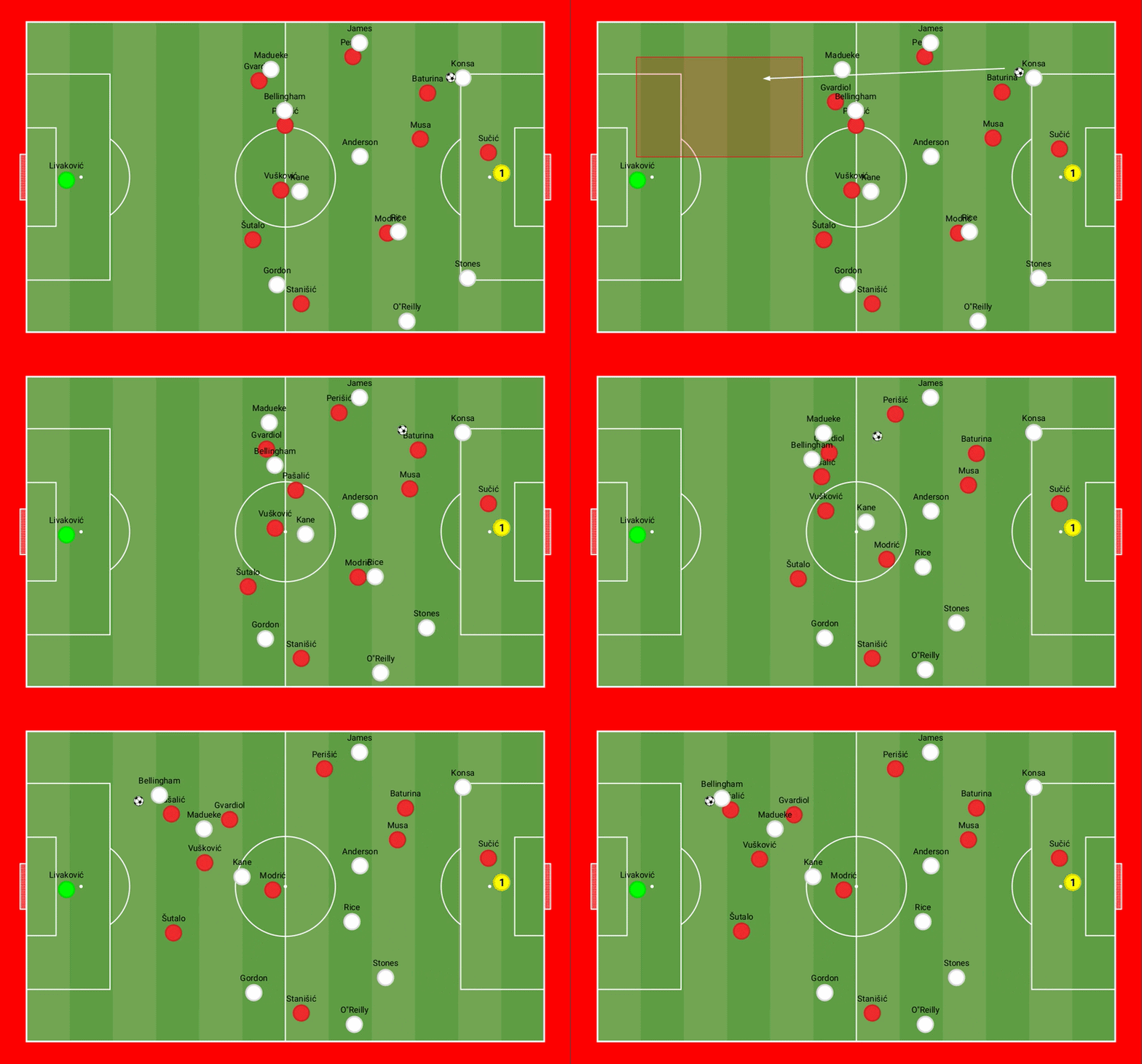
When defending in a low block, Tuchel devised a clever solution. Rice and Anderson would drop into the half-spaces as needed, filling the gaps between the full-backs and central defenders. This effectively transformed England’s formation into a 5-4-1 shape, with Bellingham moving into central midfield. It was a smart tactical move; however, the Croatians managed to overcome this strategy at the end of the first half. A superb chip from Pašalić over the defense, combined with Perišić’s excellent awareness and assist, allowed Musa to score cold-bloodedly.
Second Half
England emerged from the locker room looking like a rejuvenated team. It was as if Tuchel had given them an elixir that boosted their performance in the second half. While there were no significant changes in their playing style, England became more aggressive, their timing improved, and suddenly everything they attempted began to succeed.
In the 47th minute, Bellingham scored from a counterattack that developed due to confusion in the Croatian defense, particularly Gvardiol’s momentary lapse in concentration. England finally executed a play they had attempted several times in the first half but had failed to complete. This time, with just a fraction of a second of space given to Bellingham by Pašalić, he took full advantage.
Croatia looked like a boxer on the ropes, waiting to be struck—and that blow could have come several times if it weren’t for Livaković, who showcased remarkable reflexes throughout the match. He ended the game with seven crucial saves.
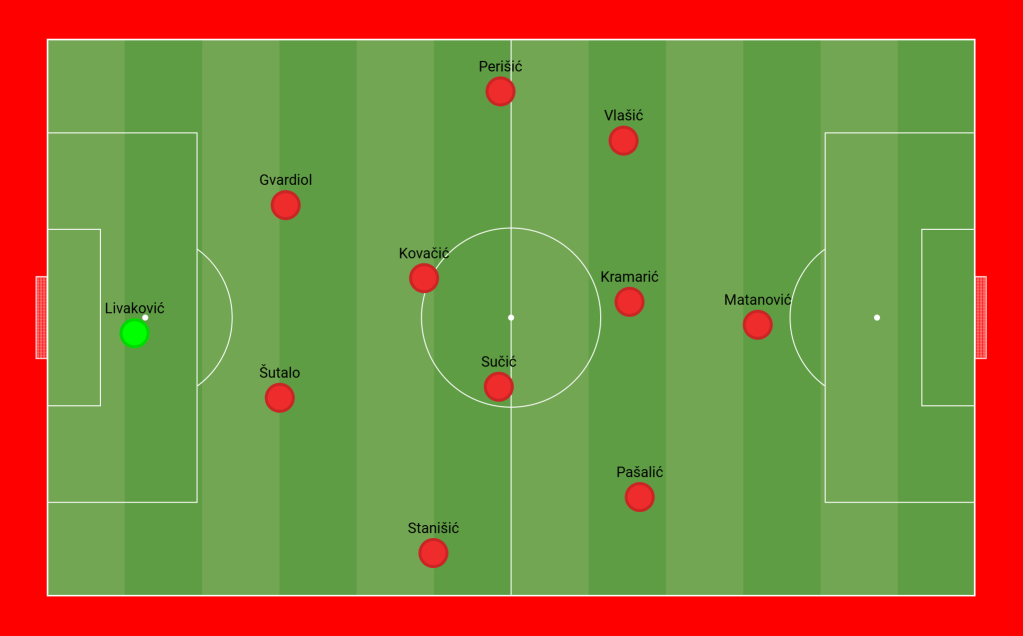
The second half for Croatia started poorly, revealing cracks in their defense. Gvardiol had one of the worst performances of his international career, and the energy of the Croatian team began to wane. England took full advantage of this decline. Coach Zlatko Dalić attempted to respond, but his adjustments came too late. He switched to a 4-2-3-1 formation, positioning Perišić at left-back and moving Pašalić and Vlašić to the wings, with Kramarić as the attacking midfielder and Matanović as the striker. Kovačić came on for the fatigued and indisposed Modrić and made a significant impact, completing 16 out of 16 penetrating passes through England’s defensive lines. Dalić paired him with Petar Sučić in midfield, which allowed Croatia to regain control of possession and appear relatively strong.
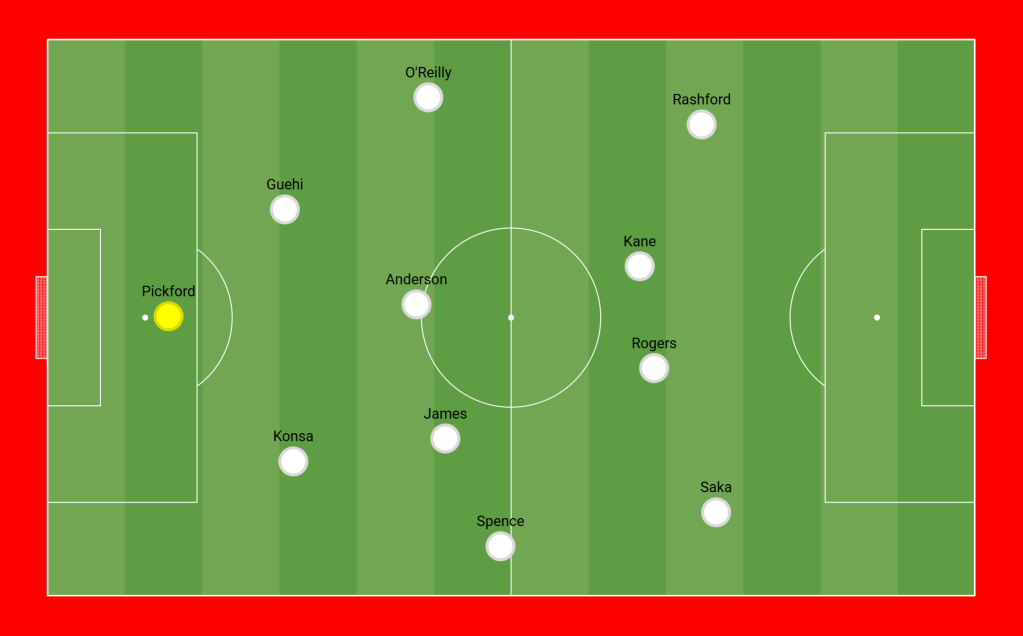
England also brought in fresh legs from their bench, featuring some of the best players in the world like Saka, Rodgers, Rashford, Spence, and Guehi. England scored their fourth goal on a counterattack, largely because Croatia had taken risks but also due to England’s incredible depth on the bench, which Croatia simply could not match.
Conclusion
Watching those two teams compete was thrilling; it truly was the best match of the World Cup so far. Dalić demonstrated his ability to step outside his comfort zone and explore new strategies to enhance his game plan. However, it is important to emphasize that a coach must quickly read the game and encourage his players to defend set pieces more aggressively, which requires better organization. The final result was too harsh for the Croatian team, as they showcased their tactical and technical skills in several areas. Unfortunately, sometimes you simply face a stronger opponent. It should also be noted that Livaković, despite conceding four goals, had an excellent performance that night.
Modrić, despite being 40 years old, still has something to prove in the upcoming matches. With the heart of a lion, I am confident he will rise to the occasion. His time to leave football has not yet come, and I believe he will show this in the next games.
On the other hand, Tuchel is proving to be a real Yoda. He is clearly preparing England for something significant by making them mentally resilient, instilling belief in his players, and bringing out their best—all while ensuring an attractive style of football with several innovations. Is it coming home?