
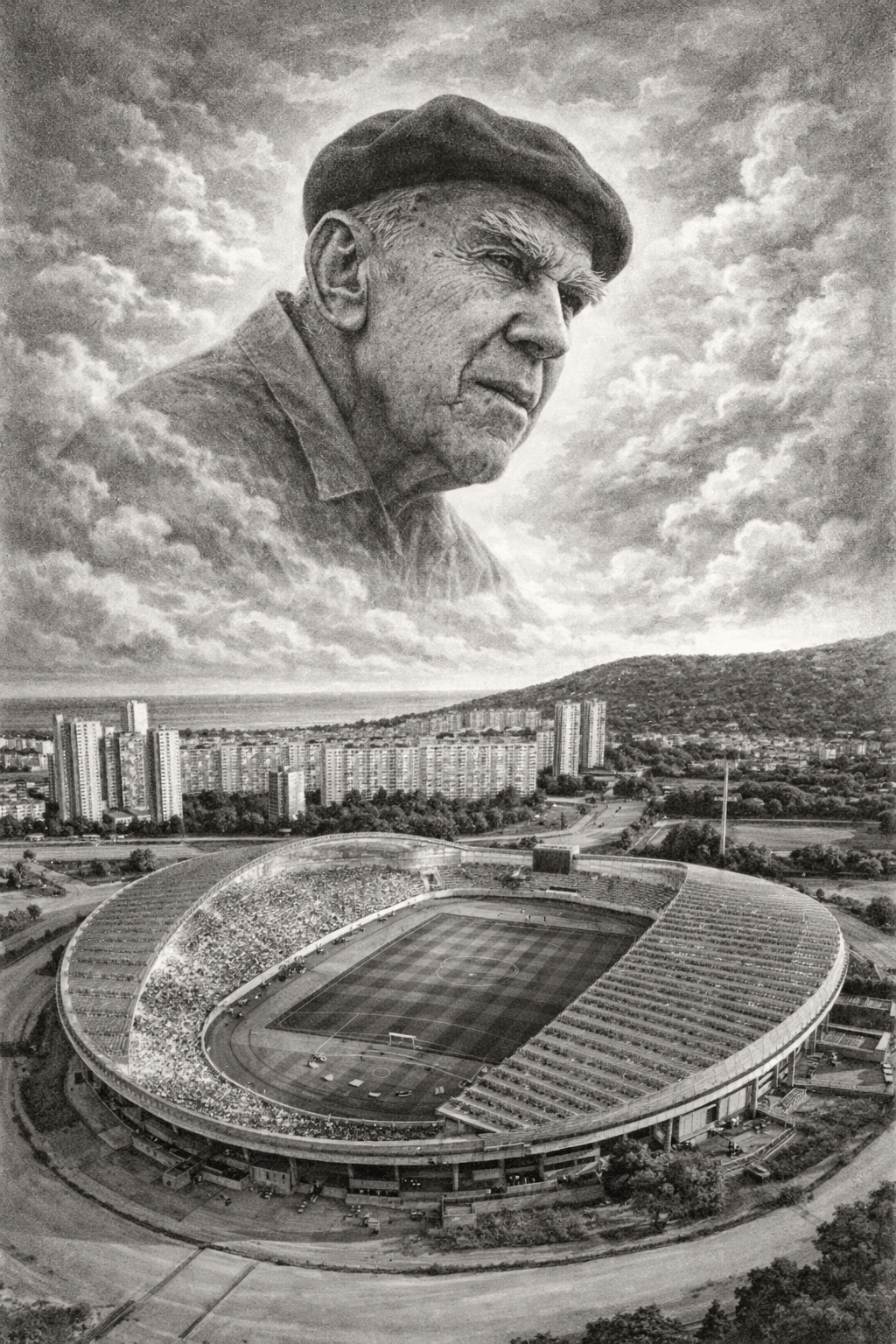
In the realm of football, a select few iconic coaches have reshaped the game, with Michels and Cruyff leading the charge. Ajax revolutionized soccer with the invention of total football, where every player’s movement reflects precision and instinct, showcasing the brilliance of both Michels and Johan Cruyff. At Barcelona, Cruyff’s vision blossomed, introducing a whole new set of principles that redefined how the game is played. His disciple, Josep Guardiola, ignited a new era of tiki-taka that transformed Spain and inspired football worldwide. Guardiola continues to push the boundaries of the beautiful game, inspiring generations to come.
Long before those legends took center stage, one visionary laid the foundation in Split: Barba Luka Kaliterna, the architect of Split football. Even before Gusztav Sebes crafted the Magical Magyars and conquered the world, Kaliterna pioneered progressive football principles. His brother, Fabjan Kaliterna, co-founded Hajduk, paving the way for a rich sporting heritage in Split. Barba Luka’s remarkable journey began as a goalkeeper for Hajduk in 1912, where he not only excelled in football but also made his mark in rowing, competing in the European championship in 1924.
Ascending to coach the Hajduk youth in the 1920s, his profound passion for the game was matched only by his extraordinary pedagogical flair. As a self-taught football teacher, he created a remarkable football university that emphasised mastery of ball control. His inspiring adage, “Every player should practice his leg until he is as precise as with his hand,” reflects his unwavering commitment to the fundamentals. Utilising innovative methods, he taught rhythm and technique with a hung ball, while his creative approach of drawing a football goal on the wall and dividing it into numbered regions challenged players to strike targets with precision.
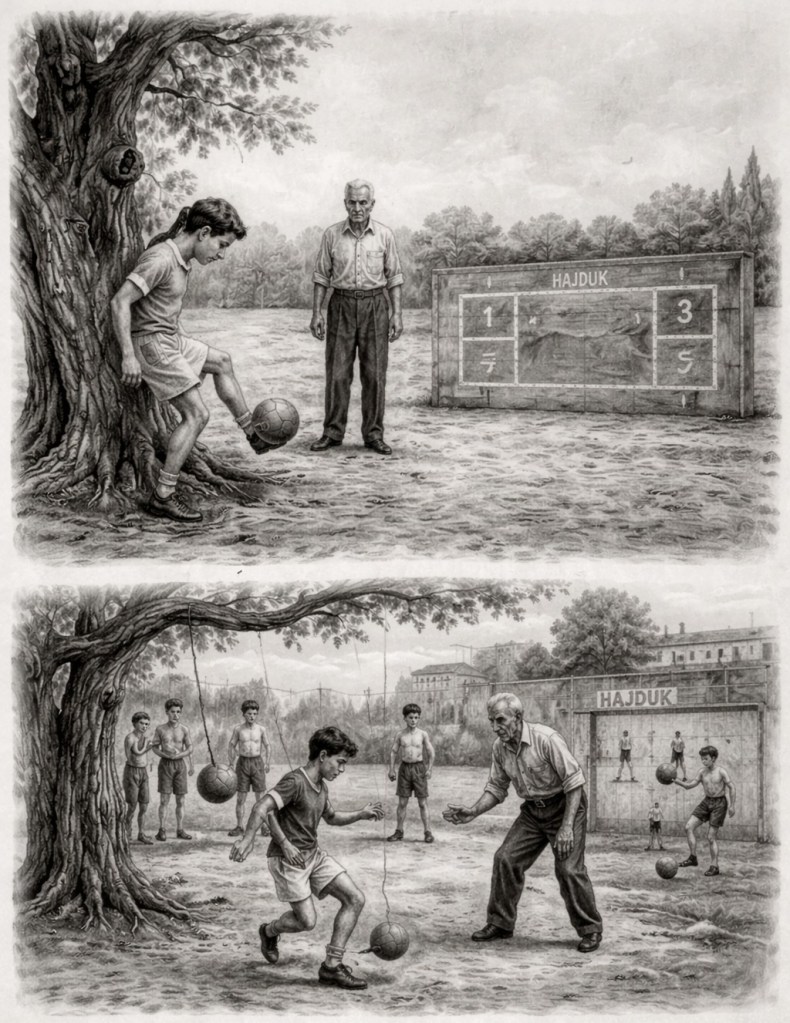
Once players mastered the basics of the football alphabet, he introduced them to triangular geometry, fostering quick thinking and open stances, orchestrating rondos well before the term was popularized. His insightful maxims, including “Touch with one leg, pass with the other,” “The game is played by the player without the ball,” and “Keep your head up,” reveal his deep understanding of the sport.
Preparing his team for opponents, he skillfully crafted training sessions that mirrored real game scenarios, providing invaluable feedback to refine their skills. His belief that “The game is giving the goal, not the player” serves as a poignant reminder of the power of teamwork, while his statement that “The one playing for himself plays for the opponent” continues to resonate deeply today.
Under his guidance, Hajduk proudly secured Yugoslav championship titles in 1927, 1929, and 1950, nurturing a wealth of talented players. In a remarkable 1924 friendly against Czechoslovakia, an astounding ten of the eleven starters for Yugoslavia came from Hajduk.
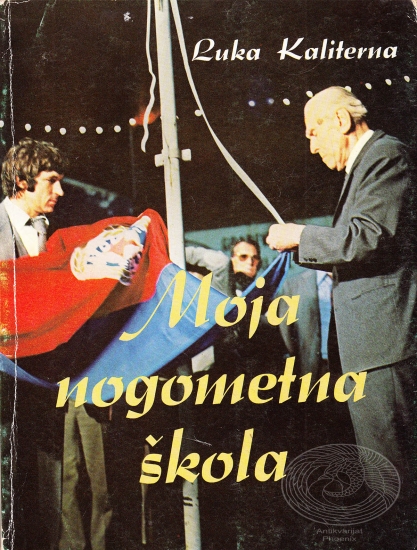
Kaliterna’s strong-mindedness occasionally led to clashes with club officials, famously declaring, “If I’m not good enough for you, here are the club keys.” However, he would quickly regain composure and smoothed things over. Later, as a youth coach in RNK Split, he continued to inspire, recognized for his extraordinary football acumen. His wisdom lives on in his book, “My Football School.”
Miljenko Smoje immortalized his spirit in the cherished series Velo misto, bringing to life the character of Duje, a goalkeeper and football teacher. Today, Hajduk Split’s football academy proudly honors his legacy through the Football Academy Luka Kaliterna, celebrating his lasting influence on the beautiful game.
 Diamond Football Tactics