
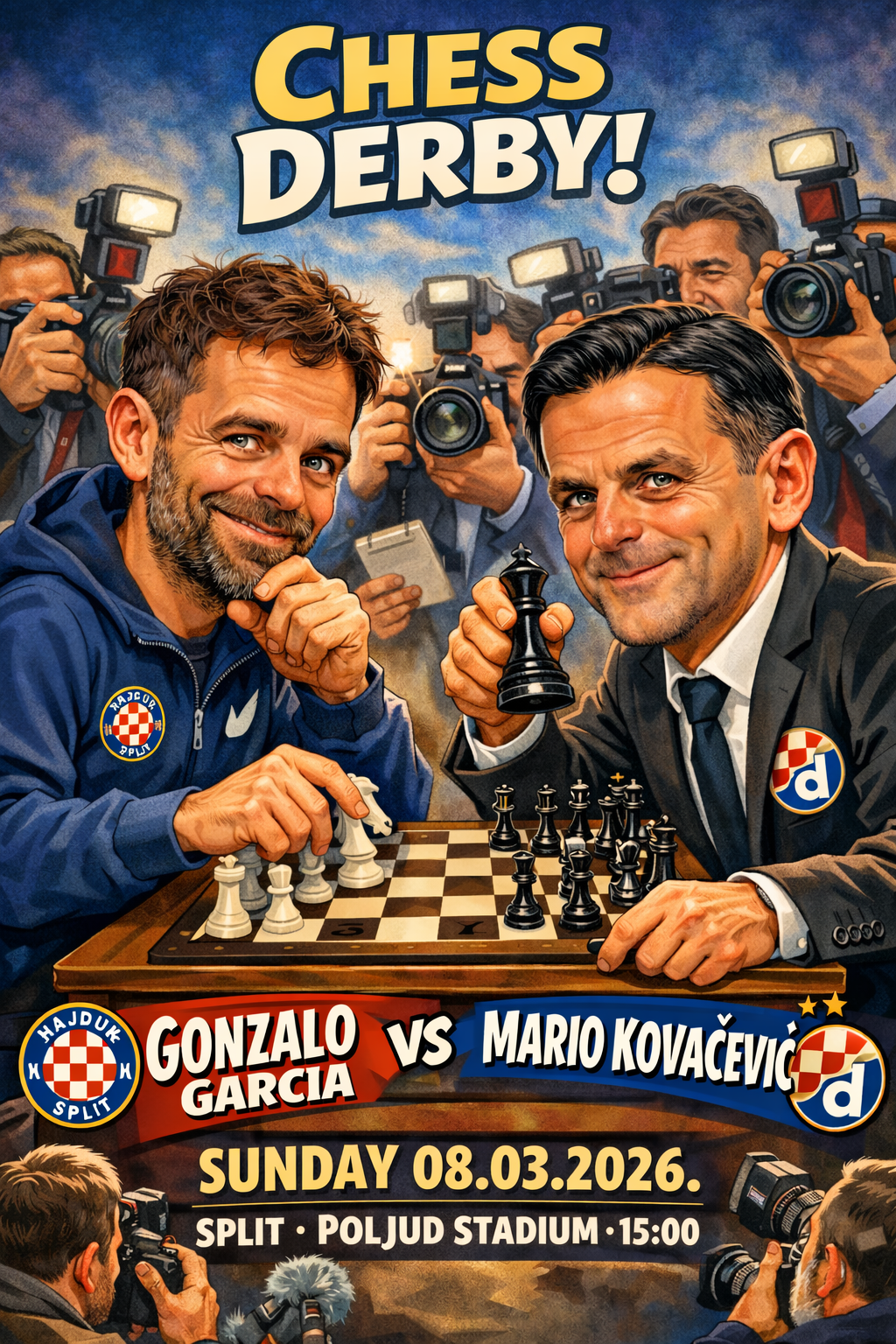
Gonzalo Garcia and Mario Kovačević were the two best coaches that the SHNL had to offer last season, making it logical for them to take over Croatia’s best teams.
Both managers favor a proactive, possession-oriented style of football, but they have different approaches to man management and tactical realization.
On one side is Gonzalo Garcia, an emotionally intelligent, strong-minded, and mature individual who prefers a well-structured and controlled style of football. He specializes in developing young players within his system. In his approach, there is little room for improvisation; players must understand their roles at all times and know where the ball should go. Both static and dynamic geometric principles are clearly defined, and most situations are tightly controlled.
However, a significant drawback of this style is that it can stifle creative players who thrive on inspiration and possess their own unique creativity. This often conflicts with Garcia’s structured approach to positional play. To succeed within Garcia’s system, players may have to suppress their creativity and egos, adhering strictly to the coach’s plan without much room for critical thinking or situational improvisation.
On the other side is Mario Kovačević, a humble and compassionate individual who aims to help others express themselves creatively. His coaching and man management style can be described as relational. Like Garcia, Kovačević favors possession-oriented football, but with a much lower level of structure. He encourages his players to express themselves on the pitch, allowing many situations to be resolved through players’ improvisation and intelligence.
This clash is not accidental; it has historical roots. Hajduk has often favored coaches with a structured approach, a tradition that began with Luka Kaliterna and continued with Tomislav Ivić, one of its finest representatives. Historically, there has been a clearly defined style of playing football at Hajduk, which often leaves little room for individual creativity. A notable example of this is Ivić’s insistence on creative players like Jurica Jerković and Blaž Slišković fulfilling their designated roles, while minimizing opportunities for improvisation. Coaches such as Stanko (Špaco) Poklepovič and Ante (Biće) Mladinić acknowledged the need for structured play against stronger teams but allowed more freedom for creative players when the situation warranted it. Even more recent home coaches like Tudor, Jurić, and Leko are highly oriented toward structured play.
The evolution of structure and functionality in Split has not been born out of ideology but rather out of necessity, cultivated to compete against stronger teams. There is a recognized way of playing football known as the “Hajdučki way,” characterized by defensive sacrifice and structuralism, with everything subordinated to results and directness. This coaching mindset, which was evident even in the football school, has produced many great, defensively-oriented players with high work rates. Unfortunately, this has also resulted in some of Croatia’s most gifted players, such as Boban, Modrić, and Baturina, seeking refuge in Zagreb’s football schools, which appreciate creativity more. Meanwhile, some exceptional players, like Jerković, Slišković, Asanović, Rapaić, Računica, Huljev, Carević, Grgurević, Selak and Teklić never reached their full potential because they struggled to develop their talents in a rigidly structured game focused more on defense and destruction.
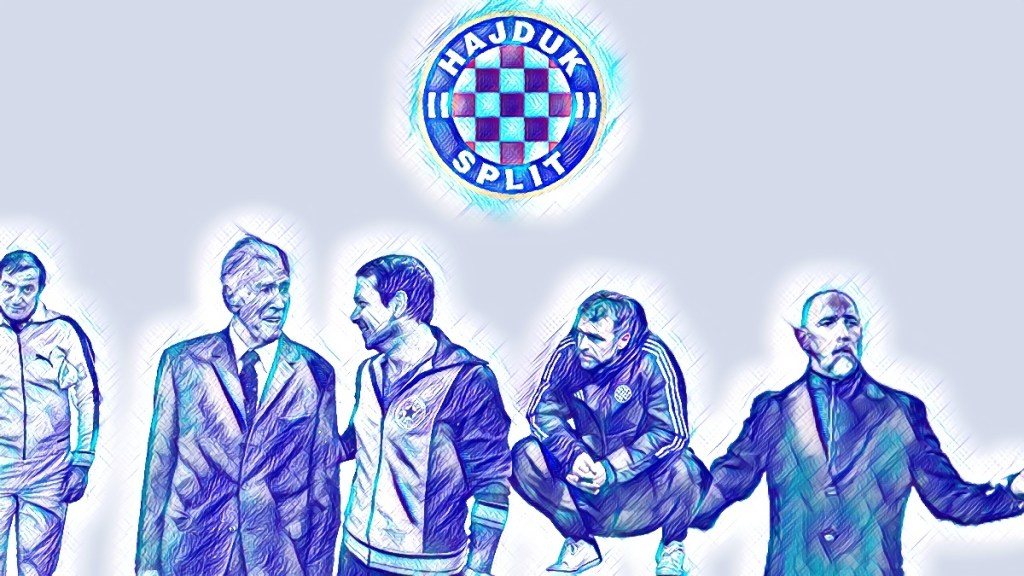
Garcia adopts a highly structured approach to enhance technicality and possession but still maintains a system with minimal improvisation and highly automated strategies that rely on learned tactical mechanisms, limiting offensive and defensive creativity.
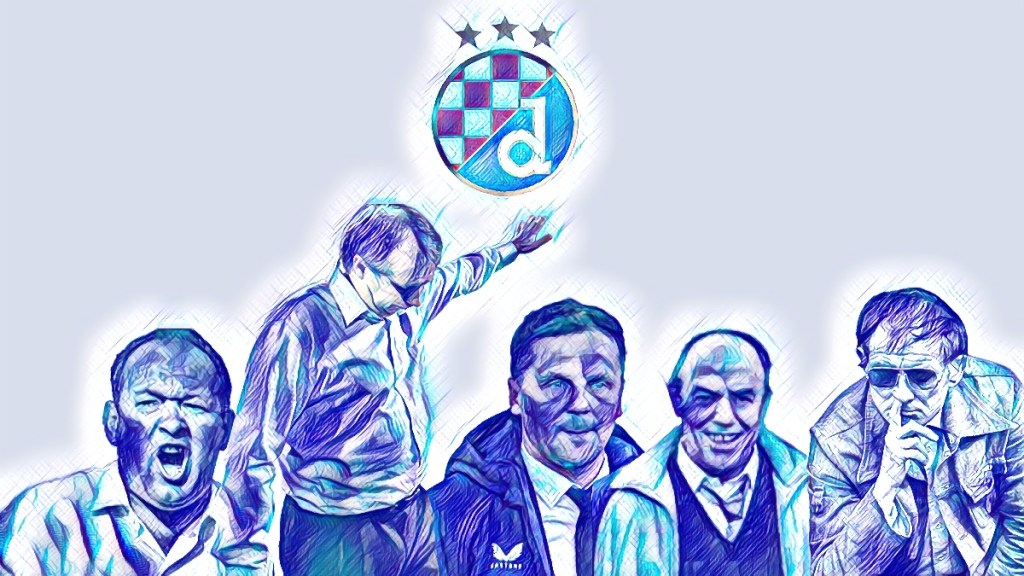
Conversely, Zagreb football has long been renowned for its aesthetic approach, developing outstanding players capable of critical thinking and improvising solutions on the field. This has led to the emergence of brilliant football talents like Hitrec, Bobek, Čajkovski, Vukas, Lamza, Kranjčar x2, Mlinarić, Boban, Prosinečki, Modrić, Kovačić, Olmo, Baturina,… Croatian national football is highly regarded for these players’ intuitive and creative abilities, embodying relationism. Although there have been highly structured coaches, such as Branko Zebec, who could be considered one of Croatia’s best, many others have also recognized and nurtured football creativity and aesthetics, including Čajkovski, Marković, Blažević, Kranjčar, and Kuže. Kovačević’s football philosophy aligns with this tradition.
Regarding Sunday’s derby, Hajduk will likely start with their positional play. The question is whether they will employ a buildup game in a 4+2 back structure or a 3+2 structure, which will depend on personnel. It is also uncertain whether Marešić will play alongside Raci or Skelin, as this will affect the positioning of Hajduk’s defensive line. Additionally, it remains to be seen if Melnjak will occupy the fullback position and whether Livaja will be included in the lineup. Sigur and Pajaziti are out, while Krovinović is expected to start but is in a psychologically distressed state after making a significant mistake in the last cup match against Rijeka.
The match profile will depend on whether Livaja or Šego starts as the striker. If Garcia sticks to his football philosophy, Šego is likely to be the preferred choice because of his defensive contributions—especially if Hajduk’s defensive strategy includes applying pressure on Dinamo’s key player, Mišić. It’s important to mention that Hajduk’s standout player this season, Almena, is still sidelined due to an ankle injury. In the recent match against Rijeka, Garcia experimented with a three-man defense, trying to close defensive gaps by utilizing Melnjak as the third central defender and positioning Hrgović and Brajković as wingbacks. Could he implement a similar strategy in tomorrow’s match?
On the other hand, Kovačević will likely set up as expected in a 4-3-3 formation, with the main question being who will start on the flanks (fullbacks and wingers). Dinamo is facing health issues with Hoxha and Lisica, and they will probably not be in the starting eleven, which could present challenges in the offensive third, especially since Bakrar and Vidović are not traditional wingers if they start the match. If Dinamo develops their game effectively, they have the capability to overwhelm their opponents, making it difficult for Hajduk to defend against them. Additionally, Dinamo is known for its strong set-piece play, featuring players like Dominguez, Beljo, and McKenna, and they have a high conversion rate for chances created during open play.
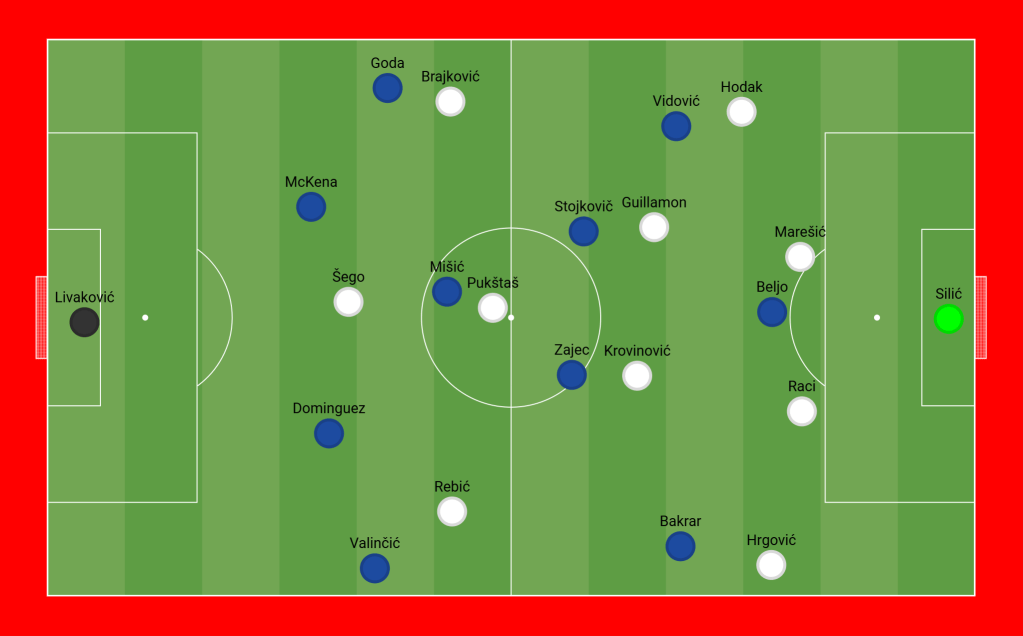
The most intriguing battle is likely to occur on Hajduk’s left flank and Dinamo’s right flank, where Hrgović and Rebić will attempt to assert their influence against Valinčić and Bakrar, and vice versa. A significant portion of the game will depend on whether Hajduk can effectively mark Mišić’s distributions. Key factors will include which team dominates possession, whether Hajduk can defend against Dinamo’s set pieces, and if Hajduk’s players can minimize their technical errors while in possession.
How the game will unfold? Let’s see!
 Diamond Football Tactics