
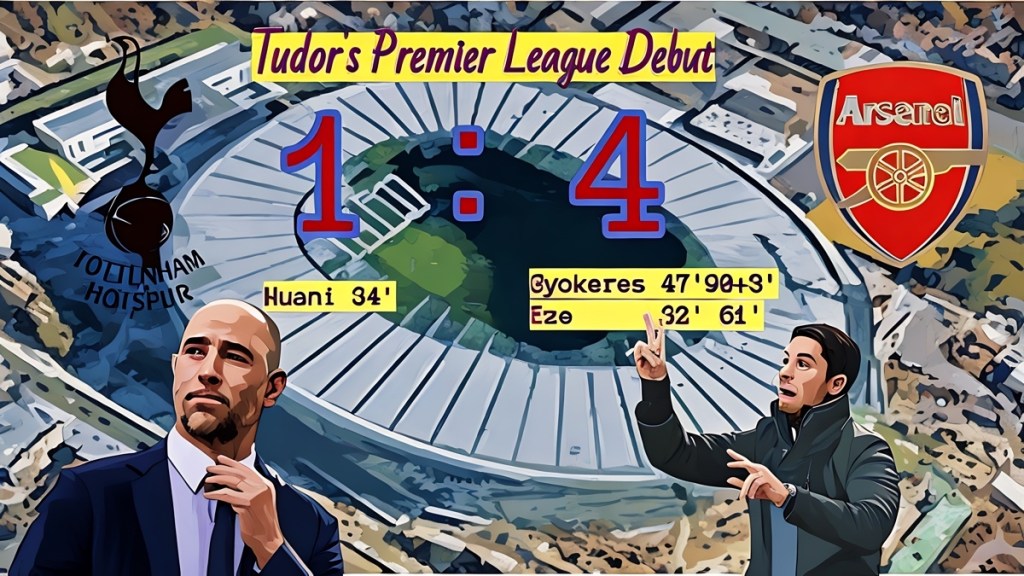
As mentioned in the match preview, the game unfolded as expected. Tudor made an immediate and significant impact. Despite missing several players, he transformed the team. He accurately assessed Arsenal’s match plan and took some risks, which ultimately resulted in a 4-1 defeat. However, this outcome was largely due to his limited time to coordinate the team and effectively implement his strategy.
Tottenham lined up in what resembled a 3-5-2 formation with Simons and Mouani up front. Arsenal, on the other hand, set up in a formation that looked like a 4-2-3-1, with Eze taking a free role instead of Ødegaard.
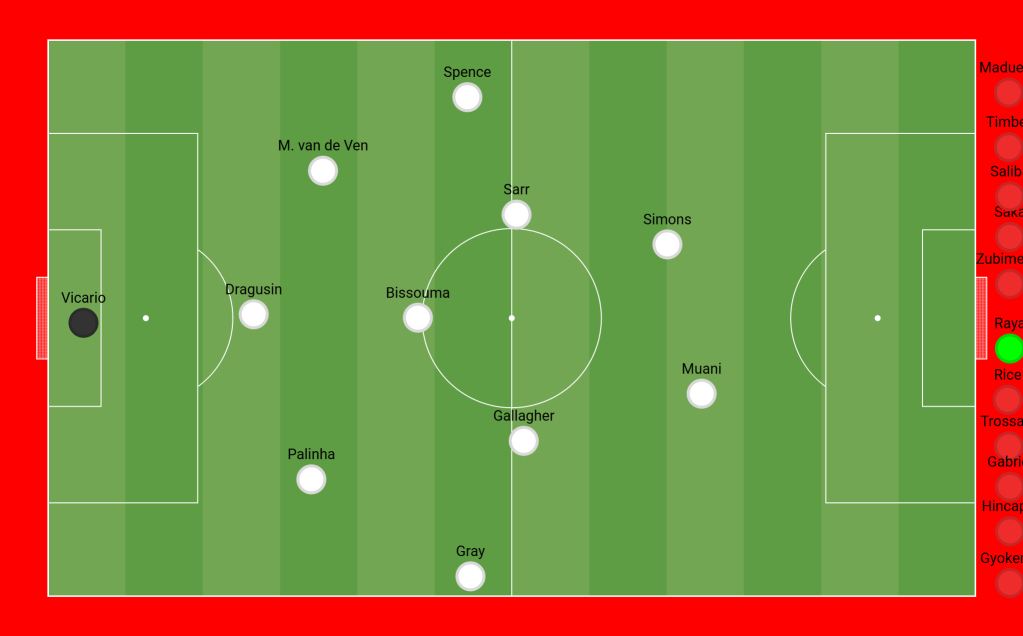
Arsenal displayed solid possession, compelling Tottenham to drop their defensive lines deeper. When Arsenal attempted back passes, Tottenham applied pressure in a structured manner. This was clearly highlighted when Tottenham equalized after pressing Rice, leading to an excellent transitional finish from Mouani. There were instances when Arsenal had to resort to long balls, which exposed some disarray in Tottenham’s defensive organization among their three central defenders, along with a lack of communication with their goalkeeper. It was evident that Goyakeres and Eze were trying to draw Tottenham’s central defenders out of position, creating space for Arsenal’s wingers to exploit. However, for the majority of the first half, Dragusin effectively handled those long balls.
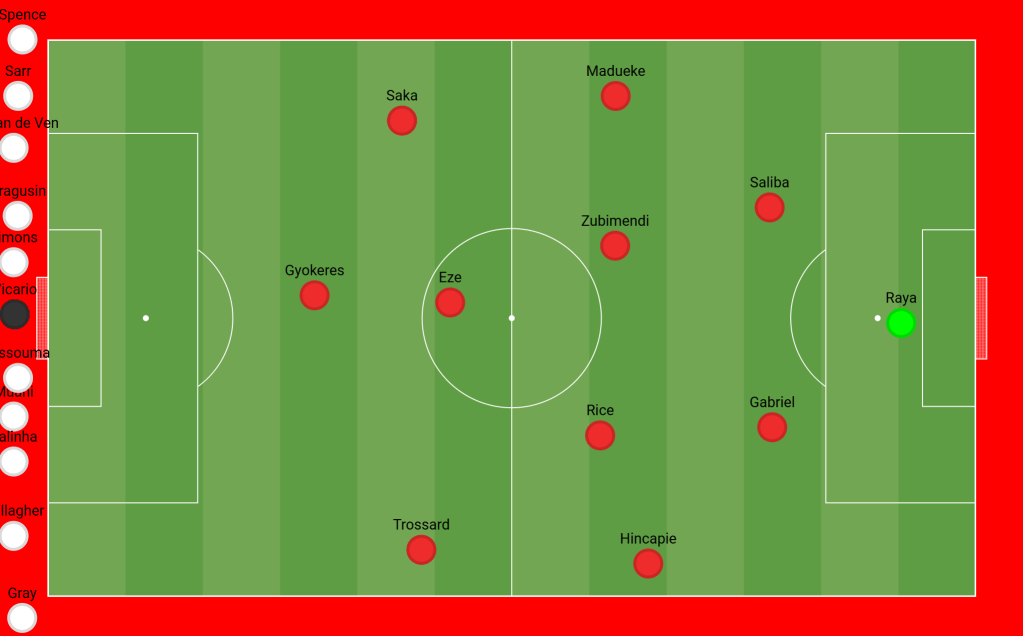
Saka and Eze had a significant impact on Arsenal’s performance and posed challenges for the Tottenham defense, particularly evident during the first goal. Saka made an impressive run down the flank and delivered a precise low pass to Eze, who skillfully controlled the ball and volleyed it into the net. Additionally, it should be noted that Arsenal was very dangerous from set pieces throughout the match.
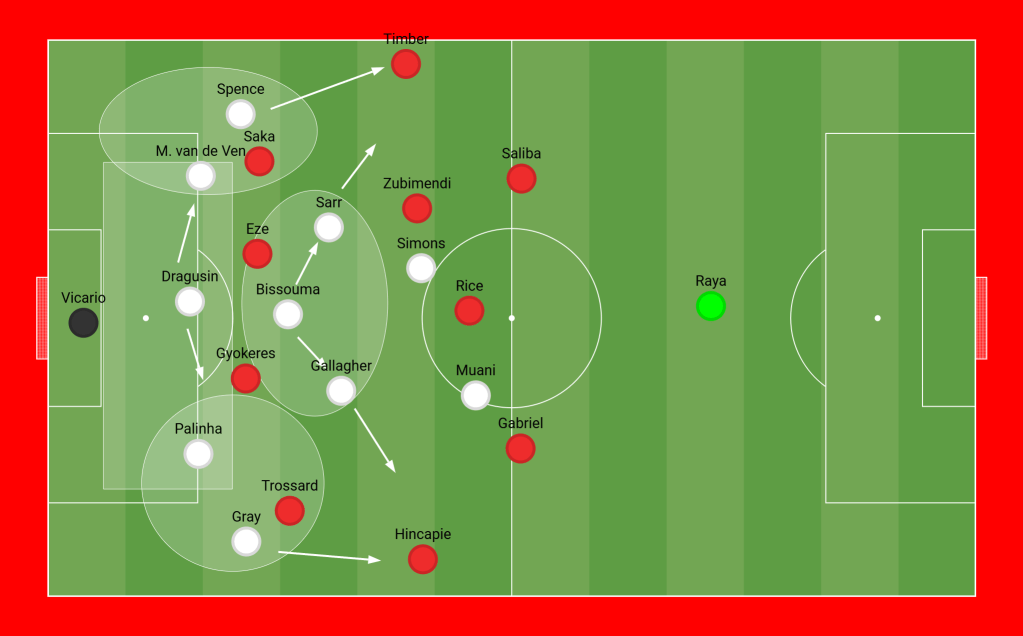
In conclusion, by the end of the first half, it could be said that Arsenal was the better team in possession, while Tottenham held solid control in the box.
Second half
In the second half, both coaches kept their lineups. Soon after kickoff, Arsenal took the lead, which significantly impacted Tottenham’s tactical plan. Tottenham needed to open up in the second half, and they attempted to do so, but problems in their offensive organization were evident right away. In the buildup, Tottenham’s wingbacks, Gray and Spence, stayed low, allowing Arsenal’s press to take effect. The Tottenham midfield struggled to maintain possession, and as a result, the entire team found it difficult to string together more than three passes in a row. Arsenal, on the other hand, was very dangerous on the break when winning the ball.
Tudor made some substitutions, bringing on Solanke for Gallagher and Richarlison for Kolo Muani. Later, he introduced Tel for Paulinha, shifting him to a wingback position and changing the system to a more offensive 3-3-4. However, this did not significantly impact possession geometry or dynamics; it simply provided a bit of extra energy and aggression.
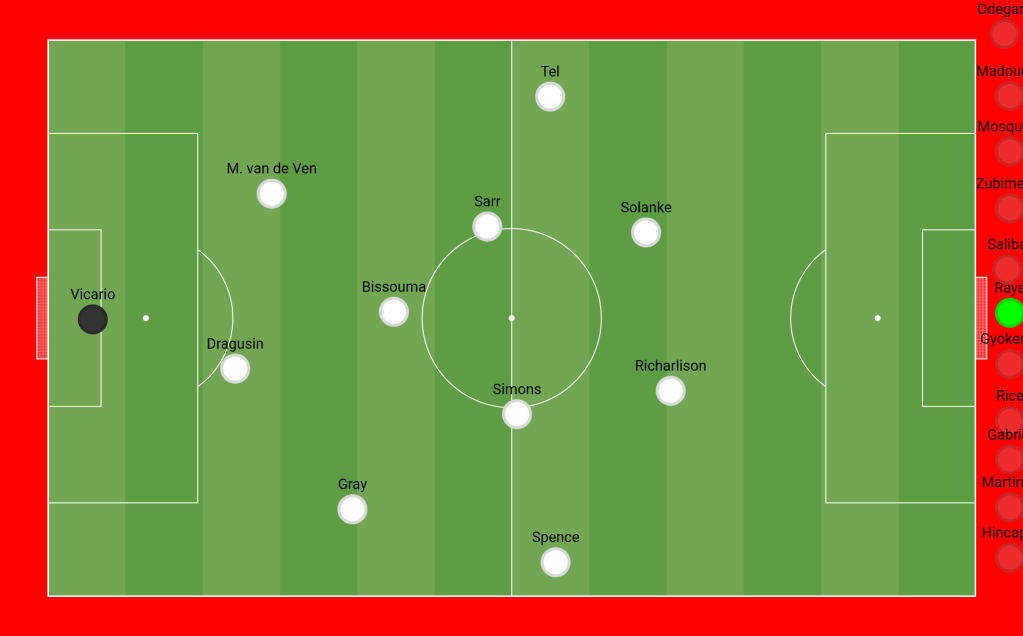
On the other side, Arsenal capitalized on what was given. Gyokeres, Eze, and Saka did an excellent job exploiting some disorganization in Tottenham’s defensive transition. Gyokeres was particularly effective in creating space for his teammates and was clinical in finishing.
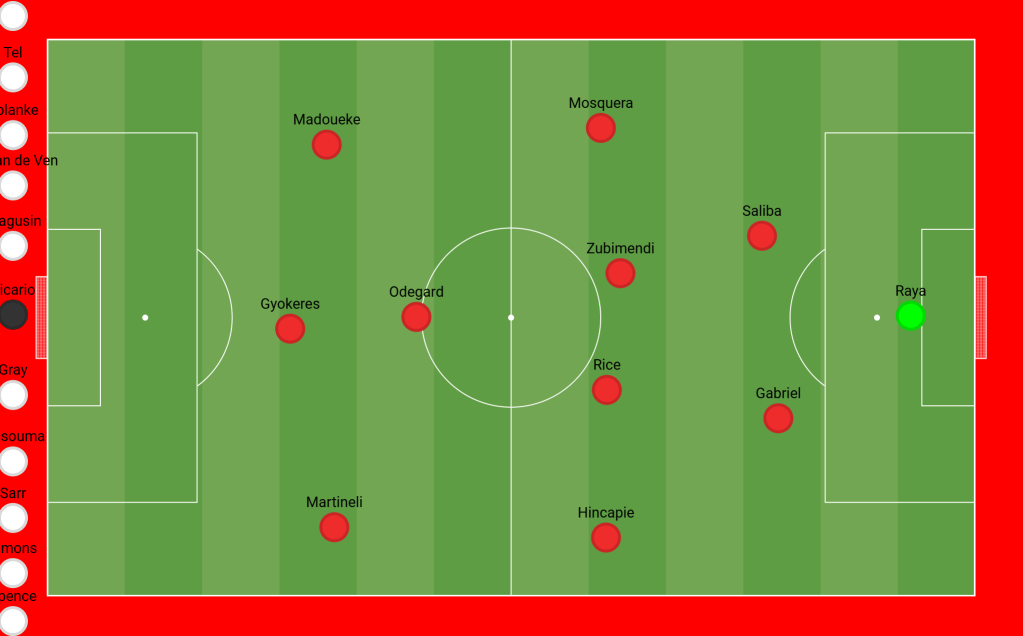
In conclusion, while Tudor presented Arteta with some challenges due to his unusual defensive shape, Arsenal adapted in the second half. For Tudor, there is a lot of work ahead. The new energy and ideas are evident, but time will be needed to coordinate the defensive mechanisms, especially time to develop the geometry and mechanisms of the attacking phase.
 Diamond Football Tactics