

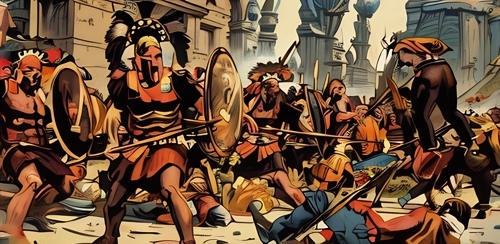
Since ancient Greek military times, as seen with groups like the Sacred Band of Thebes and the Spartans, the importance of friendship in fostering group cohesion has been well recognized. Strong relationships enhance teamwork, leading to improved performance and a greater willingness to fight for one another. True human character reveals itself in difficult times; if the core of the group is weak and there is a lack of mutual respect, everything can fall apart.
For any group to function effectively, a hierarchy is necessary. When this hierarchy is clear and accepted by everyone, emotional connections within the group naturally arise.
When analyzing Dinamo Zagreb’s locker room, many might attribute the club’s success over the past 20 years solely to extraordinary players. However, that perspective misses an essential truth.
Despite frequently changing coaches and managers, Dinamo achieved remarkable results primarily due to a well-established, naturally hierarchical atmosphere in the locker room. The environment was characterized by mutual respect, friendliness towards new players, and a strong work ethic.

Inside the locker room, there are several socially and emotionally intelligent leaders—such as Ademi, Petković, Mišić, Ristovski, Zagorac, and Perić—who are instrumental in creating a positive culture. While there have certainly been excellent players and great coaches who passed through this locker room, the foundation of Dinamo’s achievements lies in the strong bonds formed among the team members and the supportive, emotionally accepting atmosphere that developed as a result.
These individuals truly love the club and possess the knowledge needed to foster an excellent working atmosphere both on and off the pitch.
Currently, various names are circulating for potential new sporting directors, and there are many ideas on how the club’s sports sector should be structured. However, perhaps it is time for the core group at the club to step back from playing and, with guidance from experienced business mentors, take on new roles that leverage their leadership skills.
They may have even more to contribute to the club—this time off the pitch. Perhaps it’s time to let friends who love the club and are natural-born winners and leaders guide it into a new era. Only time will tell!

 Diamond Football Tactics