

Imagine a place where victory is the norm, where winning is expected just as breathing is, and if you can’t achieve it, you’re labeled a failure and a loser. In this place, nothing can help you until you succeed.
Yes, such a place exists, and it has produced some of the world’s greatest athletes. Can you think of a city that has won 104 Olympic medals yet has fewer than 200.000 inhabitants? Split is home to legends like Toni Kukoč, Dino Rađa, Goran Ivanišević, Đurđica Bjedov, Blanka Vlašić, and Ivano Balić—just to name a few. But how did this city achieve such greatness in sports?

Beyond the success stories, countless individuals have given their all but still come up short. Many of these people find fulfillment in celebrating the achievements of others, while also applying pressure to those who are more accomplished. They often criticize and belittle elite athletes when they fail, as it forces them to confront their own shortcomings. This city thrives on the fear of losing; to feel alive, victory is essential. The entire community is united in this relentless mentality.
This mindset has fostered a unique breed of people—a group of “generals” capable of building athletes physically and, more importantly, psychologically to withstand such immense pressure. Even the coaching giants faced the same demands in order to succeed. When surrounded by such a pervasive fear of failure, pain often becomes a certainty that athletes must embrace to achieve victory.
Split is unforgiving and relentless, ready to humiliate and crush anyone who shows even the slightest weakness. However, when someone is close to winning, the entire city rallies around them, pushing them toward success with enthusiasm, as they take pride in claiming them as their own. There is little compassion or understanding to be found; only contempt and humiliation await until one succeeds. The biggest problem arises when athletes internalize these critical voices and they become their own greatest enemy.
In this environment, coaches must develop a deep understanding of this mentality to help athletes make the necessary advancements. It’s worth noting that coaches also bear enormous pressure in the process.
In Split, there is one club where the pressure is greatest: Hajduk. Football coaches are often seen as solely responsible for any failures, making them feel isolated amid the collective expectations. In this club each word and promise carries significant weight; if expectations are unmet, the coach faces ridicule. Within this challenging atmosphere, they must find inner peace and devise strategies to win the next game, all while aiming to bring joy and happiness to the very people who demand victory.
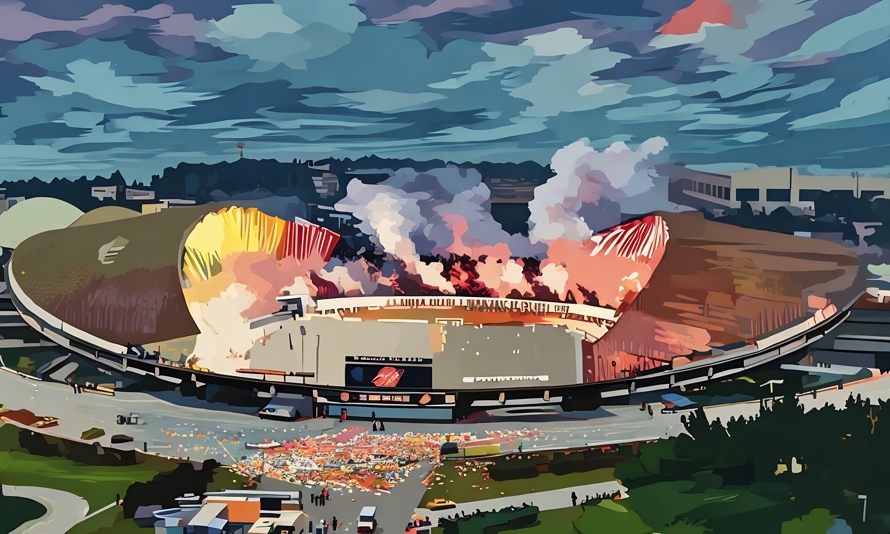
Being a football coach in such surroundings is arduous, but the challenges foster growth and build resilience. If a coach lacks creativity or a clear strategy to navigate this hostile environment, it’s better not to begin at all, as the city is quick to devour those who cannot deliver on expectations.
While the city is engulfed in a frenzy of emotions and takes out personal frustrations on perceived losers, coaches become generals of truth, driven by tactics and game plans. They constantly seek ways to secure the next victory, develop players, and refine strategies. This is a difficult task, especially when met with hostility from the community that demands immediate results.
If you don’t succeed, the only victory you may find is to endure the pain and accept it, for the only way forward lies in your inner creativity and enjoyment in the process.

Such experiences forge true character giants, and those who emerge from this struggle are truly ready for success.
Today, the mentality in Split has shifted somewhat. However, this city, once driven by the fear of failure, has produced remarkable figures in football coaching. Giants such as Luka Kaliterna, Ante Mladinić, Tomislav Ivić, Stanko Poklepović, Ivan Katalinić, Ivan Jurić, Slaven Bilić, Ivan Leko, Zoran Vulić, and Igor Tudor will always be remembered for their significant contributions to the city’s victories.
 Diamond Football Tactics